WalesLink.com
Connecting the World to Wales
WalesLink.com
Connecting the World to Wales

WalesLink.com
Connecting the World to Wales

When you think of Wales, you might picture ancient castles, rugged mountains, and dramatic coastlines. But nestled in its green valleys and gentle slopes, a different kind of magic is taking root. The Welsh wine industry, with a history stretching back centuries, is blossoming into one of the most exciting cool-climate wine regions in the world.
From pioneering family-run vineyards to internationally acclaimed award-winners, the Welsh wine trail offers a unique journey for the curious traveller and the seasoned connoisseur alike. This guide will introduce you to the story, the vineyards, and the unforgettable taste of Welsh wine.

Photo by Look Studio on Unsplash
The story of winemaking in Wales is a tale of resilience. It’s believed the Romans first planted vines here around AD 75, a tradition later continued by monks in medieval abbeys. After centuries of disruption, the modern era truly began in the 1960s and 70s with a new generation of pioneers. Today, with over 30 vineyards and roughly 100,000 bottles produced annually, the industry is thriving, built on a foundation of quality, innovation, and a deep connection to the land.
The unique Welsh climate is perfect for growing specific grape varieties that produce crisp, aromatic, and elegant wines. The most widely cultivated grapes include Solaris, Rondo, Bacchus, and Regent. However, you’ll also find classic varieties like Chardonnay, Pinot Noir, Pinot Meunier and Seyval Blanc , which are used to create exceptional traditional-method sparkling wines.
As Welsh wine continues to gain international recognition, one grape variety has emerged as a quiet powerhouse in vineyards across the country: Solaris. Bred specifically for cooler climates, Solaris is perfectly suited to the unique environmental challenges of viticulture in Wales, offering both resilience and remarkable flavour.
But what makes Solaris such a reliable choice for Welsh winemakers? Let’s explore why this grape is taking root in the Welsh wine industry.
Wales is known for its cool, damp conditions, which can pose serious challenges for traditional grape varieties. Solaris, however, was developed to meet those very conditions head-on. With early ripening and impressive disease resistance, it thrives where many other varieties falter.
One of the key reasons Solaris is so well-suited to Wales is its early bud break and rapid ripening cycle. In a region where the growing season can be shorter and less predictable, this early development means Solaris grapes can reach maturity well before the first frosts—ensuring consistent quality and yield year after year.
The damp climate of Wales makes fungal diseases like powdery mildew and botrytis a common threat. Fortunately, Solaris is known for its strong resistance to fungal infections, which significantly reduces the need for chemical sprays. This not only helps maintain sustainable, low-intervention viticulture but also aligns with the growing demand for eco-conscious Welsh wines.
Originally bred in Germany, Solaris was engineered with northern European climates in mind. It performs exceptionally well in cooler, wetter regions, making it an ideal match for the rolling hills and sheltered valleys of Monmouthshire, Pembrokeshire, and beyond.
Despite its practical advantages, Solaris doesn’t compromise on quality. Wines made from Solaris grapes are typically:
From zesty, citrus-driven white wines to elegant sparkling expressions, Solaris wines from Wales have shown they can hold their own on the international stage.
In many ways, Solaris represents the future of Welsh winemaking: adaptable, sustainable, and capable of producing wines with true character and depth. It enables Welsh vineyards to meet both the environmental challenges of their climate and the expectations of modern wine drinkers.
As more vineyards across Wales continue to embrace Solaris, this resilient variety is proving that world-class wine really can come from the cool hills of Cymru.
As Welsh red wine continues to make its mark, one grape stands out for its ability to thrive in the cool, damp climate of Wales: Rondo. This deep-hued, disease-resistant hybrid is proving to be a reliable cornerstone for winemakers seeking to produce quality red wines in the UK’s northern latitudes.
Like Solaris, Rondo was bred specifically for cooler climates. Its early ripening, disease resistance, and cold hardiness make it exceptionally well-suited to the unpredictable Welsh weather. In a climate where traditional Vitis vinifera varieties often struggle to ripen or fall victim to mildew, Rondo offers consistency and resilience.
Rondo thrives in temperate, maritime climates, like those found in Monmouthshire, Glamorgan, and Carmarthenshire. It ripens reliably even during shorter growing seasons, which makes it an excellent match for the Welsh viticultural calendar. This adaptability allows winemakers to harvest ripe, flavourful grapes even when summers are cool and wet.
Fungal diseases such as powdery mildew and downy mildew are common threats in Wales’ high-humidity environments. Rondo’s built-in resistance to fungal infections significantly reduces the need for chemical treatments. That’s a major win for sustainable viticulture in Wales, helping vineyards embrace more eco-friendly farming practices.
Rondo’s ability to ripen early means it can be harvested before autumn rain sets in or temperatures drop too low. For Welsh growers, this offers crucial peace of mind in a region where weather patterns can shift quickly. Early ripening also improves consistency in both yield and quality—two vital components for any emerging wine region.
Rondo produces wines that are:
Welsh winemakers often use Rondo as a standalone varietal or blend it with other cool-climate grapes to add body and depth. The resulting wines can range from fruit-forward and easy-drinking to more complex expressions with excellent ageing potential.

Thanks to its hybrid heritage, cold-climate suitability, and high-quality wine potential, Rondo is fast becoming a go-to variety for producing award-winning Welsh red wines. It reflects the broader spirit of Welsh winemaking—resilient, innovative, and deeply connected to the land.
From the vine rows of White Castle Vineyard to other pioneering estates across the country, Rondo is helping redefine what Welsh vineyards can achieve.
In the blossoming world of Welsh white wine, few grape varieties have sparked as much enthusiasm as Bacchus. Known for its vibrant aromatics, zesty acidity, and cool climate adaptability, Bacchus has emerged as a key player in the evolution of British winemaking—and it’s thriving in Welsh vineyards.
Named after the Roman god of wine, Bacchus is remarkably well-suited to the cool, maritime climate and well-drained soils of Wales and southern England. It’s a grape that benefits from long, mild growing seasons—conditions increasingly found in Monmouthshire and other Welsh wine regions.
Bacchus performs exceptionally well in the temperate conditions of the UK. It ripens earlier than many other white grape varieties, allowing growers to harvest before the threat of autumn rains—a critical advantage in Wales’ shorter growing season.
Vineyards situated on slopes or in valleys with free-draining soils—common in areas like the Wye Valley—are ideal for Bacchus. These soils prevent waterlogging and encourage the development of concentrated, high-quality fruit.
Thanks to the cooler temperatures, Bacchus retains a refreshing natural acidity, which is essential for creating wines that are crisp, lively, and incredibly food-friendly. This makes Bacchus wines perfect for pairing with local seafood or goat’s cheese—especially those found in Welsh farmers markets.
What truly sets Bacchus apart is its distinctive flavour profile. Expect:
These flavours often draw comparisons to Sauvignon Blanc, and in blind tastings, English Bacchus has even outshone its French rival.
Bacchus has rapidly become one of the most planted and awarded varieties in British vineyards. As Welsh wine producers seek varieties that combine resilience with elegance, Bacchus ticks every box. Its ability to express local terroir while remaining reliably productive makes it a favourite among both new and established vineyards.
The success of Bacchus in Wales isn’t just a technical achievement—it’s symbolic of the region’s emerging identity in the world of wine. These wines reflect a deep connection to the land, the climate, and the growing movement for sustainable, cool-climate viticulture.
Look for Bacchus wines from pioneering producers such as White Castle Vineyard or Llanerch Vineyard, where this vibrant grape is turned into still and sparkling expressions that are refreshingly modern yet distinctly Welsh.
As the Welsh wine industry continues to flourish, Regent has earned its place among the leading red grape varieties cultivated in Welsh vineyards. Renowned for its disease resistance, early ripening, and bold fruit character, Regent is proving to be an ideal choice for winemakers navigating Wales’ cool and damp climate.
With unpredictable rainfall and shorter growing seasons, growing grapes in Monmouthshire and the surrounding regions isn’t without its challenges. But Regent was quite literally bred to thrive under such conditions.
One of Regent’s standout traits is its natural resistance to fungal diseases, particularly powdery and downy mildew—both common in the moist conditions of Wales. This resilience allows winemakers to reduce chemical treatments in the vineyard, making Regent an eco-friendly and sustainable choice.
Unlike more delicate red varieties, Regent ripens early, well before the autumn weather closes in. This ensures the grapes reach optimal sugar levels and phenolic maturity, critical for producing quality red wines in northern latitudes.
Regent isn’t just practical—it’s delicious. Its small, dark-skinned berries produce wines with deep colour, intense berry flavours, and a structure that stands up beautifully to oak or bottle aging.
Expect vibrant notes of:
Thanks to its naturally high tannin content and thick skins, Regent wines offer depth, structure, and aging potential, making them ideal for both serious collectors and everyday drinkers.
Regent’s versatility means it’s not only used in still red wines, but also in fortified wines, rosés, and grape juices. Its naturally high sugar levels open up a range of production styles, and it’s increasingly celebrated by producers looking to expand the flavour profile of Welsh red wine.
One of the finest expressions of Regent can be found at White Castle Vineyard—a trailblazing Monmouthshire vineyard that has earned international recognition for its award-winning Welsh reds. Their Regent bottlings have consistently drawn acclaim for their balance, complexity, and finesse.
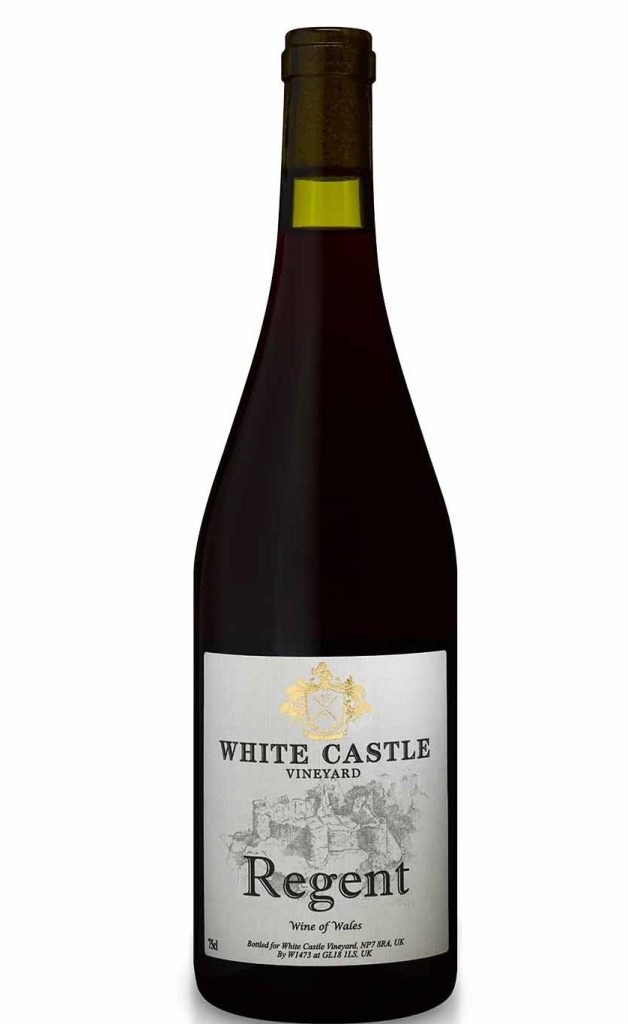
This fabulous wine is made with 100% Regent grapes grown on a gentle, south facing slope, this medium bodied red wine is deep in colour and full of rich dark berry flavours. It is an elegant, complex wine with a long, smooth finish.
At its core, Regent embodies what makes Welsh viticulture so exciting: a combination of innovation, sustainability, and a deep respect for the land. Its success in Wales proves that with the right grape and the right care, truly exceptional wine can come from unexpected places.
As Wales’ wine story continues to unfold, grapes like Regent are not just surviving—they’re setting new standards for quality and identity in the UK wine scene.
Though better known in the cellars of Burgundy and Champagne, Chardonnay has quietly found a new home in the vineyards of Wales. Revered for its cool-climate adaptability and ability to deliver crisp, elegant wines, Chardonnay is fast becoming a cornerstone of Welsh sparkling wine production.
In a country where rainfall is frequent and growing seasons are short, the choice of grape is critical. Chardonnay, with its early budding and ripening cycle, thrives in the cooler pockets of southern Wales, particularly in areas like Monmouthshire and the Wye Valley.
Wales offers Chardonnay just what it needs: mild summers, long daylight hours, and well-drained soils. These conditions allow the grape to ripen slowly, retaining the zesty acidity essential for high-quality traditional method sparkling wines.
As the Welsh wine industry evolves, sparkling wine has emerged as one of its greatest strengths—and Chardonnay is leading the charge.
Many Welsh vineyards are now planting Chardonnay alongside Pinot Noir and Pinot Meunier—the classic trio used in Champagne. These grapes, when handled with care, can produce elegant, refined Welsh sparkling wines that rival their continental counterparts.
Chardonnay is prized for its neutrality, meaning it readily reflects the terroir—the unique combination of soil, microclimate, and vineyard location. This makes it an exciting grape for Welsh winemakers seeking to craft distinctive sparkling wines that speak of place.
Chardonnay’s charm isn’t just limited to bubbles. Its versatility in the winery allows it to be crafted into a range of styles:
While sparkling remains the focus, some Welsh producers are beginning to explore still Chardonnay, showcasing its potential to produce elegant, aromatic white wines with great finesse.
Though not as widely planted as hybrid varieties like Solaris or Rondo, Chardonnay’s role is crucial. It brings international credibility, aligns Welsh winemaking with global sparkling wine standards, and offers winemakers a canvas for innovation.
Whether it’s enjoyed as part of a traditional Welsh sparkling cuvée or as a stand-alone still wine, Chardonnay continues to elevate the profile of Welsh viticulture—one bottle at a time.
Long regarded as one of the world’s most temperamental grape varieties, Pinot Noir is gaining ground in Welsh vineyards—and for good reason. Thanks to cool-climate suitability, advancing viticultural practices, and the UK’s increasingly favourable growing conditions, Pinot Noir (and its early-ripening cousin, Pinot Noir Précoce) is now a viable and exciting prospect for Welsh winemakers.
Once seen as too delicate for Britain’s capricious weather, Pinot Noir is now flourishing in select Welsh microclimates, where cooler temperatures and well-drained soils provide ideal growing conditions.
Naturally suited to temperate climates, Pinot Noir performs best where summers are mild and the growing season is long—a description that increasingly fits southern and south-eastern Wales. The grape’s sensitivity to heat makes Wales a promising region for elegant, aromatic styles.
To better match the shorter Welsh growing season, many vineyards plant Pinot Noir Précoce, an early-ripening clone. Its ability to mature more quickly while maintaining fruit character makes it less vulnerable to autumn rains and cooler harvests. The resulting wines often have lower acidity and softer tannins, ideal for still red wine production.
While climate change poses challenges globally, warmer UK springs and sunnier summers have created more reliable ripening windows for Pinot Noir in Wales. These shifts, combined with better understanding of site selection and vineyard management, have made Welsh winemaking more viable than ever.
Techniques such as careful pruning, canopy management, and clonal selection have enabled growers to maximise sun exposure and grape quality, essential for coaxing the best from Pinot Noir’s thin skins and tight clusters.
Some Welsh vineyard sites—especially those with chalky or limestone-rich soils—mirror the geological profiles of France’s Champagne region, where Pinot Noir has thrived for centuries. This makes Pinot Noir a natural fit not just for sparkling wine, but also for increasingly ambitious still wine production in Wales.
Traditionally, Pinot Noir has played a key role in Welsh sparkling wines, blended with Chardonnay and Pinot Meunier. But that’s starting to change.
There’s growing enthusiasm for producing still red Welsh Pinot Noir, especially from Pinot Noir Précoce. These wines are often light to medium-bodied, with flavours of cherry, raspberry, and subtle earthy undertones—a style perfectly suited to the Welsh terroir.
As Welsh viticulture matures, Pinot Noir is emerging as both a versatile and expressive grape that can shine in sparkling blends or stand alone as a still red wine. With the right conditions and continued innovation, it could become a flagship variety for Wales in the years to come.
While often playing second fiddle to Chardonnay and Pinot Noir, Pinot Meunier is carving out a quiet yet essential role in the growing world of Welsh sparkling wine. Valued for its early ripening, cool-climate adaptability, and ability to bring freshness and fruit to blends, Pinot Meunier is proving to be a smart choice for Welsh vineyards focused on traditional method fizz.
As sparkling wine production flourishes across Wales, many winemakers are planting Pinot Meunier to complete the classic trio used in Champagne: Chardonnay, Pinot Noir, and Pinot Meunier.
Pinot Meunier performs exceptionally well in cooler, wetter climates, like those found in Wales. It’s more forgiving than Pinot Noir, particularly in regions with unpredictable springs and shorter summers.
Pinot Meunier buds later and ripens earlier, making it a dependable option in the shorter growing seasons typical of Wales. This timing helps reduce the risk of damage from spring frosts and autumn rains.
Welsh winemakers are increasingly turning to Pinot Meunier to enhance their traditional method sparkling wines, appreciating the balance and approachability it brings to the blend.
Pinot Meunier contributes bright red fruit notes, such as strawberry, raspberry, and redcurrant, and helps soften the blend with its lighter body and lower tannins. This fruity vibrancy complements the structure of Pinot Noir and the acidity of Chardonnay, creating a harmonious and expressive Welsh sparkling wine.
Though it hails from the Champagne region of France, Pinot Meunier is proving to be perfectly adaptable to Welsh terroirs. Its ability to thrive in similar soils and climates makes it a natural choice for vineyards across southern and central Wales.
Compared to Pinot Noir, Pinot Meunier is generally more resistant to coulure, a condition where grapes fail to develop after flowering. This reliability ensures better yields, especially in the often unpredictable Welsh growing conditions.
As the UK sparkling wine industry continues to boom, Pinot Meunier plantings are rising in step. Welsh vineyards are increasingly recognising its practical advantages and flavour contributions, making it a key player in the nation’s viticultural future.
Though less talked about than its counterparts, Pinot Meunier is quietly essential to the success of many Welsh sparkling wines. With its balance of resilience and finesse, it supports both the sustainability of Welsh viticulture and the refinement of local wine styles.
Seyval Blanc may not be the flashiest grape in the vineyard, but it’s undeniably one of the most reliable and important varieties in the history of Welsh viticulture. Its early success laid the foundation for modern Welsh winemaking, and today, it continues to play a vital role in producing crisp, complex white wines and refreshing sparkling styles that speak of their cool-climate origins.
One of the key reasons Seyval Blanc succeeds in Wales is its early ripening nature. In regions like Wales—where the growing season can be brief and cool—grapes need to reach full maturity before the arrival of autumn rains. Seyval Blanc is dependable, offering a consistently ripe harvest year after year.
Originally developed to withstand colder climates, Seyval Blanc vines are highly resilient to frost and common vine diseases. This natural hardiness reduces the need for chemical interventions, supporting sustainable practices in Welsh vineyards.
Seyval Blanc produces wines that are crisp and lively, often with citrus, green apple, and light floral notes. Depending on the winemaking style, it can also display subtle minerality—sometimes likened to white Burgundy—offering surprising depth and structure.
Welsh winemakers appreciate Seyval Blanc’s versatility. It’s commonly used for zesty still wines, but its naturally high acidity also makes it a prime candidate for sparkling wine production, especially when made using traditional methods.
Seyval Blanc has proven itself across the UK, but it’s in places like Wales—where cool summers and mild winters define the vintage—that it truly stands out. It’s adaptable, productive, and consistently delivers high-quality results, even when other varieties struggle.
While trendier grapes may come and go, Seyval Blanc remains a cornerstone of Welsh wine production. It’s a grape that has stood the test of time, offering both practical reliability for growers and elegant, refreshing wines for consumers.
Wales offers a diverse range of vineyards, each with its own unique story. Here are some of the key players to discover on your journey:
These vineyards welcome the public during regular hours, often with cafes, tours, or tasting experiences. Booking may be advised but is not usually required.
Advance booking required to visit these vineyards for tours, tastings, or dining.
These vineyards are not open to the public or offer limited/occasional access only.
Visiting a Welsh vineyard is about more than just tasting wine; it’s an experience. Many vineyards offer:
Whether you are a seasoned wine enthusiast or simply curious, the Welsh wine trail offers a unique and memorable journey. Ready to discover your new favourite? Start exploring the incredible vineyards of Wales today.
We aim to make this the most comprehensive guide to Welsh wine available. If you are a Welsh vineyard owner or manager and you don’t see your vineyard on our list, we would love to hear from you! We are passionate about showcasing every producer, big or small, that contributes to the vibrant Welsh wine scene.
Please visit our Get Your Business Featured page to submit your details, and we would be delighted to add you to our guide.