WalesLink.com
Connecting the World to Wales
WalesLink.com
Connecting the World to Wales

WalesLink.com
Connecting the World to Wales
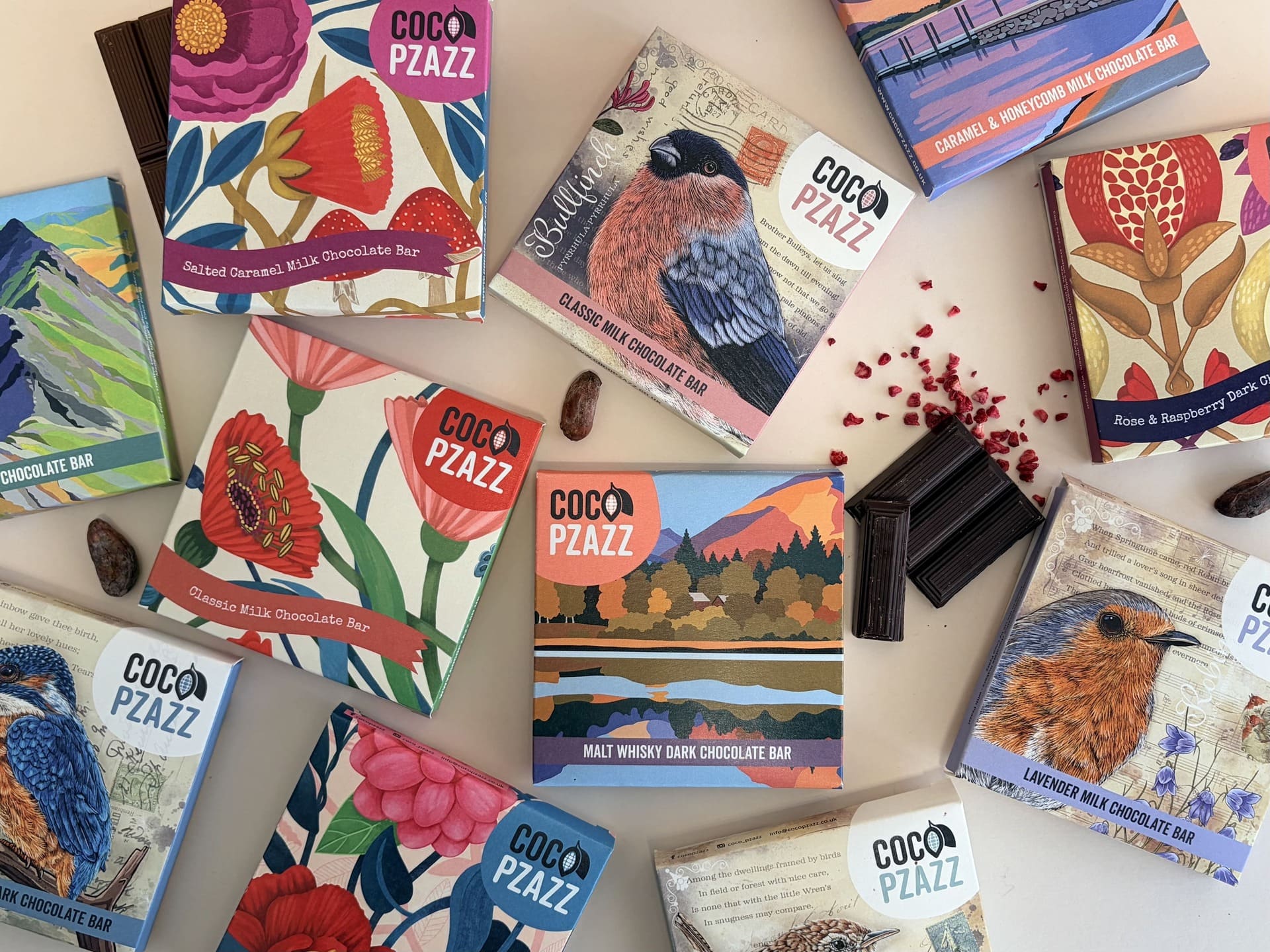
Innovation often begins not in a corporate boardroom, but with a quiet, audacious decision to build something better. In 2011, Lori, the founder of Coco Pzazz, began crafting chocolate with a singular, community-driven goal: to raise funds for equine charities. What started as an act of localized philanthropy quickly evolved into a masterclass in modern artisanal enterprise. By 2013, the operation had officially launched as Coco Pzazz, transitioning from a charitable kitchen endeavour into a fully-fledged, high-value brand operating out of Llanidloes in Powys.
Yet, Lori and her team never cared about churning out millions of generic, overly sweet bars just to conquer the high street. Instead, they chose the path of deliberate, ethical restraint. While other companies rushed to flood supermarket aisles with mass-produced sweets, Coco Pzazz chose to stay fiercely independent and uncompromising on flavour. They decided that relentless growth and maximum profit would never supersede the responsibility of doing things well. Today, this busy little team runs a thriving Mid-Wales factory that proves a powerful “Grounded Reality”: world-class innovation, high-skill manufacturing, and uncompromising ethical standards do not require a postcode in London or a mass-market conglomerate. They thrive right here, fuelled by human ingenuity and an unyielding commitment to the craft.
There is a unique resilience found in “accidental” entrepreneurs. When a business is born out of passion rather than a sterile spreadsheet, its DNA is fundamentally different. Coco Pzazz didn’t launch with a multi-million-pound venture capital backing; it launched with a leap of faith.
Over the past twelve years, that leap has solidified into a robust micro-business model. But what does it mean to be a “successful micro-business” in today’s hyper-competitive food and drink sector? For Coco Pzazz, success is measured not just by units sold, but by the integrity of the operation.
This is the essence of the modern Welsh enterprise. It is proof that high-value consumer goods can be manufactured locally, providing skilled jobs and creating a brand that commands national respect, all while maintaining the soul of an artisan kitchen.
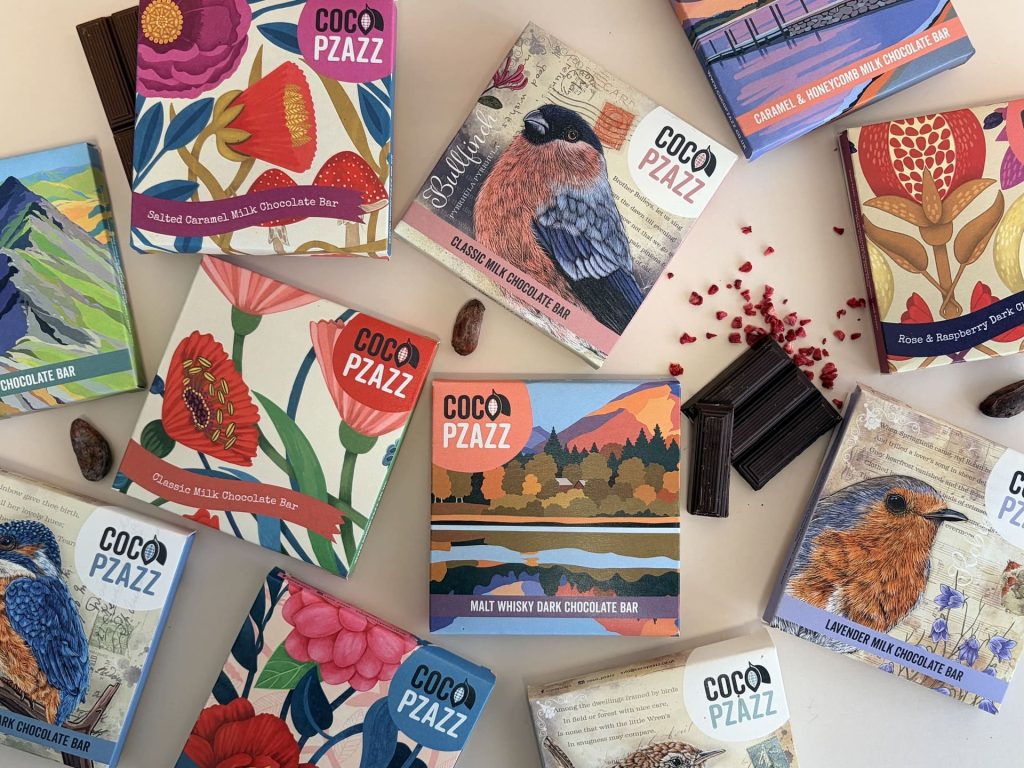
To truly understand the impact of Coco Pzazz, you have to look at where they refuse to go. You will never find their vibrant, art-wrapped chocolate bars sitting under the harsh fluorescent lights of a major corporate supermarket. This is not an oversight; it is a fiercely protective supply chain strategy.
Coco Pzazz operates on a philosophy of “supporting village by village.” By deliberately bypassing the commercial giants, they funnel their high-quality, high-demand products exclusively through independent networks. This profoundly strengthens the local and national supply chain in several critical ways:
When you buy a bar of Coco Pzazz, you aren’t just funding a chocolate factory. You are fortifying the independent delis in Pembrokeshire, the community stores in Gwynedd, and the family-run farm shops that rely on exclusive, premium Welsh products to survive and thrive. This is how a modern artisan defends the front line of the local economy.
The traditional image of a chocolate factory might evoke Victorian-era machinery or massive, industrialized European plants. Coco Pzazz shatters both stereotypes. Tucked away at Parc Derwen Fawr in Llanidloes, their workspace trades soulless assembly lines for the heavy, intoxicating scent of melting cocoa and the steady rhythm of artisan hands.
Here, the age-old art of chocolatier-ing is executed alongside progressive, modern manufacturing standards. The facility is a testament to the “Grounded Reality” that rural Wales is a prime location for forward-thinking enterprises.
One of the most striking elements of the Coco Pzazz brand is its visual identity. They recognized early on that the modern consumer wants an experience, not just a sugar rush. To achieve this, they bridge the gap between culinary arts and visual arts.
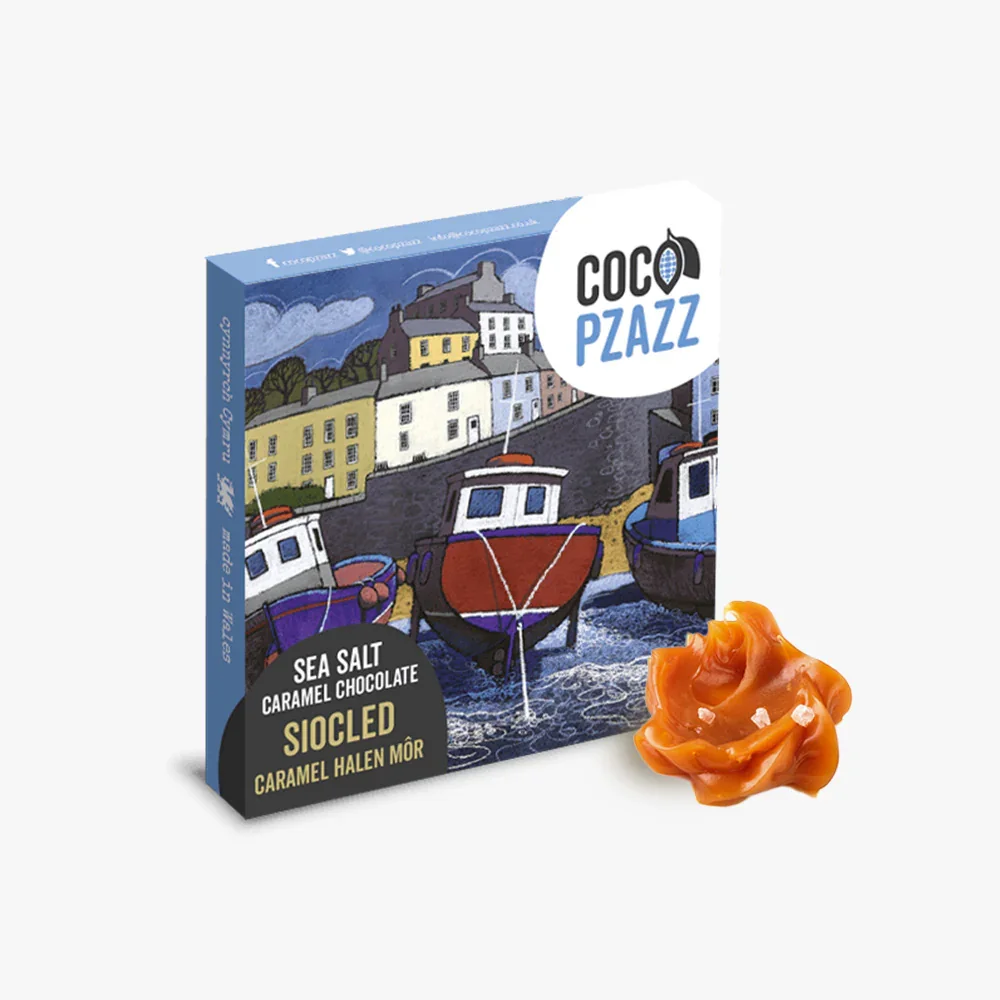
The packaging is arguably as famous as the chocolate itself. Coco Pzazz collaborates extensively with independent artists and illustrators—such as Jo March, Fiddy+Mabel, Rosie Made a Thing, Fox & Boo, Rocket68, and Chris Neale. Every bar, box of fudge, and tube of truffles serves as an innovative miniature, edible art gallery.

But beneath the beautiful designs lies a formidable feat of modern sustainable engineering:
Kimberley, embodies this cross-pollination of skills. As an artist and designer, she doesn’t just craft the visual language of Coco Pzazz; she also runs her own independent craft business, White Flamingo, right in Llanidloes. This overlapping of entrepreneurial ventures is the hallmark of a dynamic, modern artisan economy.
A business is only as strong as the people who run it. In the corporate world, employees are often siloed into hyper-specific roles. In a thriving Welsh micro-business, the team is dynamic, multi-disciplinary, and deeply connected.
This team proves that high-level operational execution, logistics management, and creative direction do not require thousands of employees. A small, fiercely dedicated team can out-innovate and out-manoeuvre massive competitors by relying on trust, community integration, and shared ethical values.
The B2C market has fundamentally shifted. Consumers are increasingly disillusioned with mass-produced, faceless brands. They are actively seeking out authenticity, ethical production, and a genuine story. They want to discover products in “curious corners,” not just toss them into a trolley at a mega-mart.
The feedback from verified Coco Pzazz customers perfectly encapsulates this paradigm shift:
Coco Pzazz has tapped into a vital truth: modern consumers don’t just buy what you make; they buy why and how you make it. By refusing to compromise on their ethics, their art, or their local roots, they have built a fiercely loyal customer base that champions the brand as much as the chocolate itself.
Coco Pzazz is more than just an accidental chocolate company. It is a blueprint for the future of B2C modern artisanship. It proves that you can build a successful, profitable business while remaining deeply loyal to your community, completely transparent in your supply chain, and uncompromisingly eco-friendly in your packaging.
From the bustling factory floor in Llanidloes to the shelves of independent farm shops across the UK, Lori and her team are writing a compelling chapter in the story of Wales. It is a testament to the grit of Welsh makers who know that a truly unforgettable bar of chocolate requires rich cocoa, late nights, and an absolute refusal to cut corners.
If the rich, dark scent of melting cocoa seems to lift from these paragraphs, seek out a local village deli and let the uncompromising craft of Coco Pzazz melt on your own tongue.