WalesLink.com
Connecting the World to Wales
WalesLink.com
Connecting the World to Wales

WalesLink.com
Connecting the World to Wales
There is a distinct, undeniable chill in the Monmouthshire air just before the sun breaches the horizon in late September. A silver mist clings to the rolling hills, wrapping itself around the ancient oaks and spilling down into the valleys.
Beneath your boots, the earth crunches. It is a striking, russet-coloured dirt—the legendary Old Red Sandstone that has defined this landscape for millions of years.
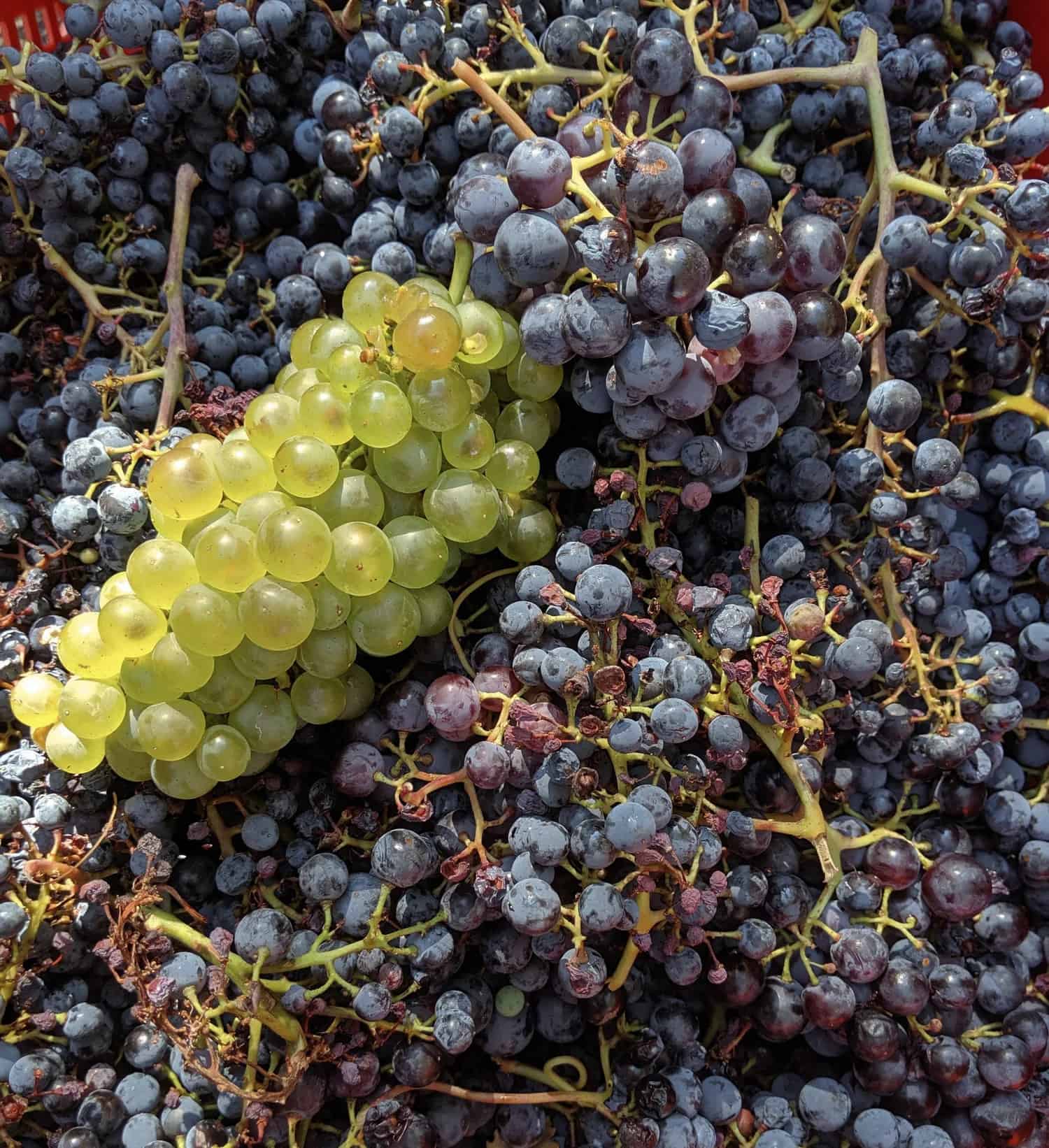
As the morning light finally breaks, it illuminates row upon row of meticulously tended vines, their leaves already beginning to curl and turn to shades of burnt orange and gold. Hanging heavy beneath this canopy are tight, dark clusters of grapes, dusted with a powdery blue bloom.
This is the quiet frontier of modern winemaking.
You might expect to find a scene like this in the storied valleys of Burgundy or the sun-drenched hills of California. But the air here carries the distinct, salty tang of the distant Welsh coast, mingling with the scent of damp earth and woodsmoke drifting from a nearby farmhouse.
We are in Wales. And the dark, jewel-like fruit waiting to be harvested is the secret weapon of the Welsh wine revolution: Pinot Noir Précoce.
For decades, the idea of producing a world-class, full-bodied red wine in the cool, unpredictable maritime climate of Wales was dismissed as a romantic folly. Our summers are notoriously fleeting; our autumns can arrive with a sudden, damp ferocity.
Yet, against all odds, Welsh winemakers are not just producing red wine—they are producing extraordinary red wine that is beating out global heavyweights on the international stage.
The key to this triumph? A perfect marriage of ancient geology, unyielding artisan passion, and a brilliant little grape with a habit of waking up early.
To understand the magic of Welsh red wine, you must first understand the heartbreak and the glory of the Pinot family.
Pinot Noir is famously temperamental. It has thin skins, making it highly susceptible to rot, disease, and the whims of the weather. It demands warm days to develop its complex sugars and cool nights to retain its crisp, elegant acidity. In the traditional Welsh climate, standard Pinot Noir often struggles to cross the finish line before the autumnal rains set in, leaving the fruit underripe and overly tart.
Enter Pinot Noir Précoce.
Known in Germany as Frühburgunder (“Early Burgundian”), this grape is a wild, natural offshoot of the classic Pinot Noir vine—sharing all of its elegant, dark-fruit flavour, but with a rebellious habit of ripening weeks ahead of schedule. It shares its parent’s regal lineage, its complex flavour profile, and its elegant structure.
But it has one distinct, game-changing advantage: it ripens up to two to three weeks earlier than standard Pinot Noir.
In the high-stakes game of cool-climate viticulture, those two weeks are everything.
It is a grape practically tailor-made for the Welsh countryside. But a grape is only as good as the soil it grows in and the hands that guide it.
To truly know a place, you must taste it. And when you drink a glass of Welsh Pinot Noir Précoce, you are tasting a landscape shaped by unfathomable time.
The concept of terroir—the idea that a wine expresses the specific geography, geology, and climate of its home—is vibrantly alive in Wales. Our vineyards are largely situated within the Anglo-Welsh Basin, an area defined by the presence of Old Red Sandstone.
This is not just dirt. This is the remnants of an ancient, arid continent from the Devonian period, over 400 million years ago.
This sandstone is incredibly rich in minerals. It provides phenomenal drainage, which is absolutely vital in our maritime climate; vines hate having “wet feet,” and the porous rock ensures that even after a heavy Welsh downpour, the root systems remain healthy and aerated.
Furthermore, this rocky soil acts as a thermal battery. During the warm summer days, the sandstone absorbs the sun’s heat. As the temperature drops in the evening, the rocks slowly radiate that heat back up into the vine canopy, gently nurturing the grapes and protecting them from sudden chills.
This terroir imparts a distinct, localized signature to the wine. Welsh Pinot Noir Précoce often exhibits a striking minerality—a subtle, earthy backbone that perfectly balances the bright, bursting red fruit flavours. It is the taste of the Welsh earth, beautifully preserved in a glass.
The story of Welsh wine is not a story of massive, corporate agribusiness. It is an intimately human story. It is driven by stubborn dreamers, passionate locals, and families who have poured their life savings, their sweat, and their souls into the land.
Nowhere is this spirit more evident than at White Castle Vineyard, carved into the sun-baked, south-facing slopes that rise just beyond the historic market towns of Abergavenny and Monmouth.
The vineyard was never meant to be a vineyard. In the 1990s, former Royal Mail worker Robb Merchant and his wife Nicola, a retired nurse, purchased a 12-acre smallholding with dreams of a quiet retirement keeping a few sheep.
But the land had other plans.
Inspired by the burgeoning English wine scene, and driven by a shared passion for agriculture, they took a colossal leap of faith. They swapped sheep for vines in 2009. They went back to school, studying viticulture at Plumpton College to ensure they had the rigorous scientific knowledge to match their unwavering enthusiasm.
They focused heavily on Pinot Noir Précoce, sensing its potential in their south-facing, sun-drenched sloping fields.
The sheer physical labour involved in those early years is hard to overstate. Pruning thousands of vines by hand in the biting wind of February; canopy management throughout the humid summers; the frantic, adrenaline-fueled rush of the hand-harvest in September.
Their dedication culminated in a moment that sent shockwaves through the global wine industry.
At the incredibly prestigious Decanter World Wine Awards, White Castle Vineyard’s Pinot Noir Précoce Reserve was awarded a Gold Medal. A small, family-run vineyard in Monmouthshire had beaten out heritage producers from Burgundy, California, and New Zealand. Robb was later recognized in the King’s Honours with an MBE for his services to viticulture.
They are not alone in this pursuit of excellence. Across Wales, a community of fiercely dedicated artisans is pushing boundaries.
These makers share a common ethos: a fierce commitment to quality over quantity, a deep respect for the land, and an infectious desire to share the fruits of their labour with the world.
So, what exactly happens when you pull the cork on a bottle of Welsh Pinot Noir Précoce?
Imagine retreating into a historic, centuries-old Welsh pub after a long hike through the Brecon Beacons. A log fire is crackling in a massive stone hearth. The air is warm and smells faintly of woodsmoke and roasting meats. You are handed a glass of ruby-red wine.
As you swirl the glass, the aromas rise to greet you:
On the palate, Pinot Noir Précoce is a revelation. It is generally light to medium-bodied, making it incredibly approachable. The tannins—the compounds that give red wine its grip and structure—are beautifully managed, resulting in a texture that is silky and smooth.
But it is the acidity that truly sets it apart. Because of the cool Welsh climate, the wine retains a vibrant, mouth-watering freshness. It is a wine that dances on the tongue, leaving a crisp, generous, and immensely satisfying finish.
It is sophisticated yet entirely unpretentious. It is a wine that invites conversation, laughter, and, above all, good food.
To truly appreciate the impact of this viticultural renaissance, you have to look beyond the edge of the vineyard.
When you purchase a bottle of Welsh wine, or order a glass in a local tavern, you are actively participating in a vibrant micro-economy. This is the front line of the Welsh artisan movement.
These vineyards breathe life into the surrounding valleys, their success measured not just in bottles poured, but in the lively chatter of locals gathering to celebrate a hard-won harvest.
1. The Field-to-Fork Ecosystem
Welsh winemakers are intrinsically linked to the farmers and food producers that surround them. The bright acidity and earthy fruit of Pinot Noir Précoce make it a dream for food pairing, and the vineyards actively promote a “field-to-fork” philosophy in their tasting rooms.
2. Sustaining Rural Employment
A vineyard requires hands. From the skilled agronomists who advise on soil health, to the local contractors who build the trellising systems, to the seasonal workers recruited from nearby villages to hand-pick the harvest—the wine industry provides vital, sustainable employment in rural areas where jobs can often be scarce.
3. The Tourism Multiplier
The rise of award-winning wine has given birth to a new kind of Welsh tourism. Oenophiles (wine lovers) are travelling from across the globe to walk the vines.
When these tourists arrive, they don’t just visit the winery. They sleep in local, family-run Bed & Breakfasts. They eat in independent gastropubs. They buy crafts from local artisans. The vineyard acts as a powerful magnet, drawing vital tourism revenue into the heart of the Welsh countryside, ensuring that historic pubs keep their fires lit and local inns keep their doors open.
To drink Welsh wine is to actively invest in the preservation of the Welsh landscape and the prosperity of its people.
To hold a glass of this wine is to hold a year of intense, passionate labour. The creation of Pinot Noir Précoce is an unyielding cycle that demands total submission to the rhythm of the seasons.
It is a beautiful, exhausting dance with nature. And it makes the final product taste all the sweeter.
There has never been a better time to discover the magic of Welsh viticulture for yourself. Exploring these vineyards offers a uniquely intimate experience. Unlike the massive, highly commercialized wine estates of Europe or Napa Valley, visiting a Welsh vineyard usually means you will be poured a glass by the very person who planted the vine.
Here is how to make the most of your Welsh wine adventure:
The emergence of Wales as a credible, highly competitive, and deeply exciting wine-producing region is one of the most compelling narratives in modern gastronomy. It is a quiet revolution born of passion, resilience, and a profound respect for the land.
The Pinot Noir Précoce grape is the vanguard of this movement. It has proven that with the right genetics, the right ancient soil, and the unyielding dedication of local artisans, the cool, mist-shrouded valleys of Wales can produce a red wine that stands shoulder-to-shoulder with the finest in the world.
So, the next time you find yourself yearning for an authentic taste of the landscape, look beyond the traditional imports. Seek out the striking ruby red of a Welsh Pinot.
Pour a glass. Hold it up to the firelight. Breathe in the scent of wild strawberries, smoked oak, and ancient earth.
You are not just tasting a wine. You are tasting the enduring spirit of Wales. Iechyd da!