WalesLink.com
Connecting the World to Wales
WalesLink.com
Connecting the World to Wales

WalesLink.com
Connecting the World to Wales
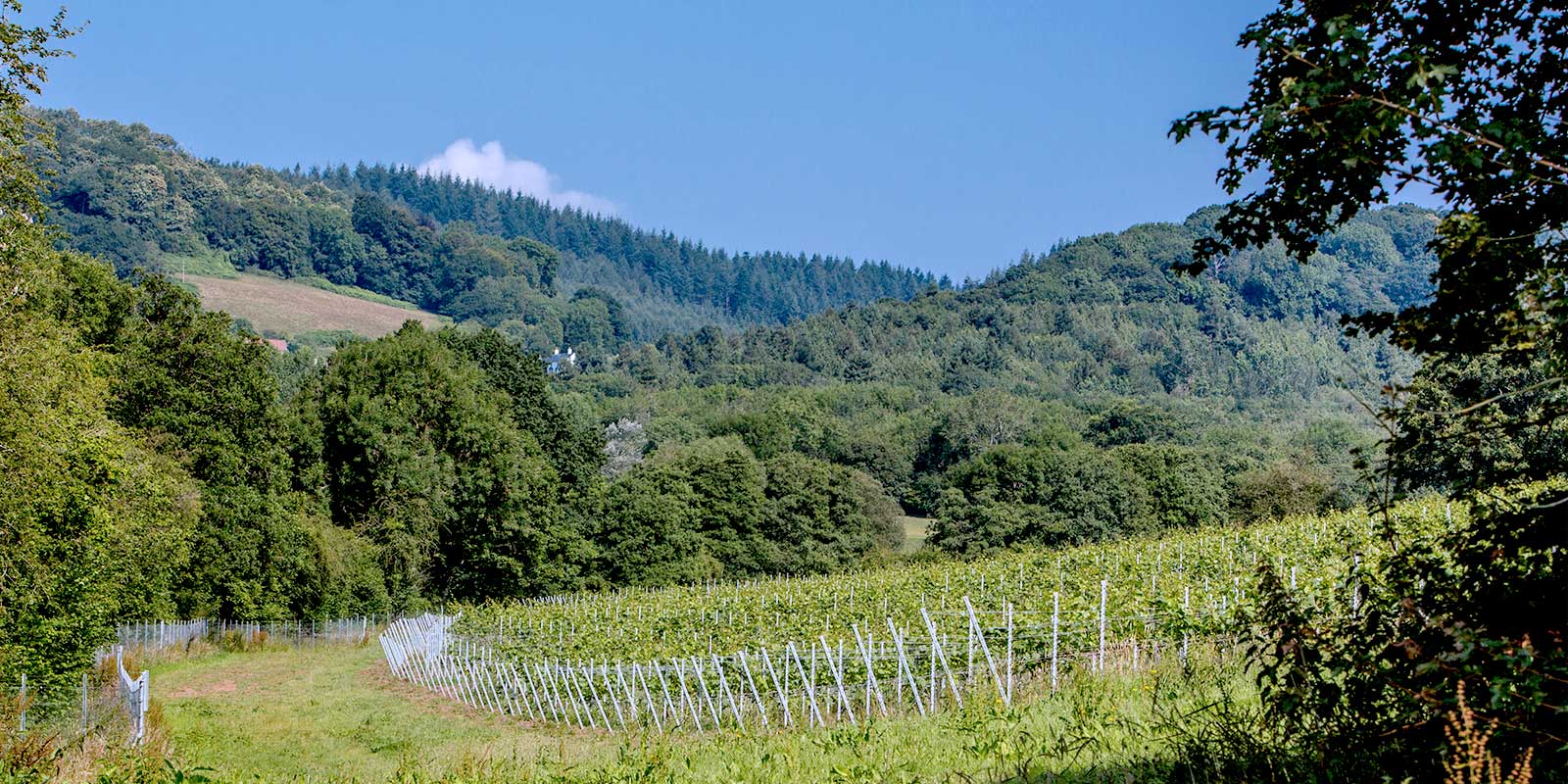
The story of Welsh wine is rapidly evolving, a quiet yet compelling renaissance that has gained momentum in recent decades. While viticulture in Wales has ancient roots—tracing back to Roman times and later revivals by monastic communities and ambitious industrialists—it is the past twenty years that have witnessed a true transformation. Today, Welsh wines, particularly their sparkling varieties, are making their mark on the global stage. Recognized for their elegance, finesse, and authenticity, they have earned accolades from competitions around the world.
At the heart of this modern Welsh wine movement is Ancre Hill Estates, a trailblazing vineyard pushing boundaries and redefining what’s possible for British viticulture.
For Richard and Joy Morris, the idea of retirement was initially synonymous with travel—visiting vineyards across the world, indulging their shared passion for fine wine. But after selling his Monmouthshire-based logistics business in his forties, Richard quickly realized that a life of leisure didn’t quite satisfy his entrepreneurial spirit. Restlessness set in.
The couple’s newly purchased home in Monmouth came with vast, empty fields, sparking a new idea: why not create their own vineyard? Rather than simply sampling the world’s wines, they decided to make their own.
Determined to understand the science behind great winemaking, Richard enrolled at Plumpton College in Brighton, pursuing a diploma in viticulture. His studies focused on climatic influences and varietal selection—key lessons that would shape the future of Ancre Hill Estates.
In 2006, their vision took root—literally—with the planting of the first 500 Triomphe vines on their property. What began as a personal project, meant to fill time, quickly expanded into a full-fledged winemaking enterprise. With the support of Joy and their four children, the modest vineyard grew to an impressive 30,000 vines, covering 9 hectares.
Nestled in the picturesque border town of Monmouth, the estate benefits from a unique microclimate, sheltered by the Cambrian Mountains and the Brecon Beacons. The vines grow at around 50 degrees Northern Latitude, a challenging but rewarding location for grape cultivation. This climatic edge imparts a distinct character to their wines—bright acidity, pure fruit expression, and refreshing complexity.
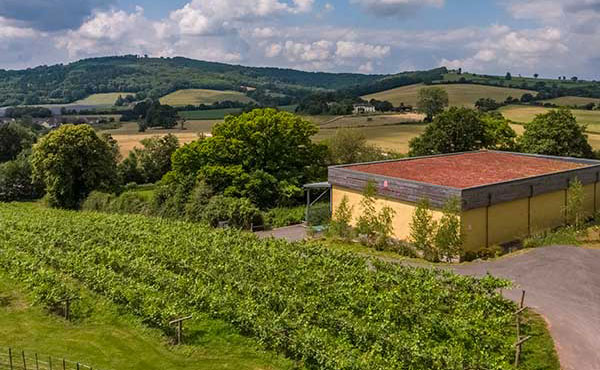
What truly distinguishes Ancre Hill estates is its deep commitment to biodynamic viticulture—a step beyond organic farming that treats the vineyard as a living ecosystem. Inspired by the principles laid out by Rudolf Steiner in the 1920s, biodynamics encompasses both ecological and cosmic influences in its approach.
At Ancre Hill Estates, biodynamic practices aren’t just marketing buzzwords; they are at the core of every decision:
This labor-intensive method requires patience and resilience—especially in Britain’s unpredictable climate—but for Ancre Hill, it’s non-negotiable.
The ethos of minimal intervention doesn’t stop at the vineyard gate—it continues into the winery itself. Constructed from straw bales with a living green roof, the winery is as much a symbol of sustainability as it is a functional space. Natural materials regulate temperature and humidity, while a reed-bed filtration system processes wastewater ecologically, supporting the plants used in their biodynamic preparations.
Inside, the winemaking process is deliberately gentle and natural. Spontaneous fermentations are encouraged, allowing native yeasts to express the vineyard’s character. No fining or filtering is used; wines are left to clarify naturally, developing complexity through extended aging on the lees (spent yeast cells).
The winery features an array of vessels for fermentation and maturation, including:
This diversity allows for small-batch experimentation while maintaining quality and integrity.
Ancre Hill Estates produces around 30,000 bottles annually, though cooler seasons like 2024 have seen production dip to about 20,000 bottles. Their vineyard is planted with Chardonnay, Pinot Noir, Albariño, Pinot Meunier, and other hybrid varieties alongside their original Triomphe vines.
Made using the Méthode Traditionnelle, Ancre Hill’s sparkling wines are the jewels of their collection. In 2012, their 2008 vintage sparkling wine won the prestigious Bollicine del Mondo award for the world’s best sparkling wine—a monumental achievement for a Welsh producer.
Notable examples include:
Ancre Hill also crafts Chardonnay and Pinot Noir still wines, with their 2018 Pinot Noir standing out for its wild, natural character and vibrant red berry flavors. Whole-bunch fermentation and minimal handling give this wine a rustic charm that reflects the land.
Perhaps their boldest innovation is their Sui Generis Orange Wine, launched in 2014. As the first UK producer of orange wine, Ancre Hill extended skin contact to develop a complex, citric, and textured profile that has become especially popular among younger drinkers.
The estate also produces sought-after Pét-Nat (Pétillant Naturel) wines in red and pink—a natural sparkling style that often sells out as soon as it’s bottled.
Ancre Hill wines are found not only in Britain’s top restaurants, such as Le Manoir, but also internationally in markets like Canada, Singapore, Hong Kong, and soon, Scandinavia.
Winemaking in Wales comes with its share of challenges. The weather can be mercurial, and the cold air that rolls down the vineyard slopes during winter risks damaging the vines. However, the Wye Valley’s meso-climate often provides just enough warmth and protection.
Commercial hurdles are also part of the landscape. Rising excise duties in the UK make pricing difficult, especially for higher-end wines. As of early 2025, a new tax system will introduce up to 30 different wine tax bands, based on alcohol by volume (ABV). This could lead to significant administrative burdens for small producers and potentially higher costs for consumers—particularly on red wines.
Despite these obstacles, the team at the Ancre Hill estate remains committed to their craft. Richard Morris, for example, proudly recalls representing the English and Welsh sparkling wine team in a competition against South Africa in Cape Town—evidence of their growing global reputation.
Ancre Hill Estates is not just a winery; it’s a 137-acre property that encompasses a way of life. With 29.5 acres of south-facing vineyards and a cider orchard, the estate offers an immersive rural experience.
The Ancre Hill Estates includes:
Richard and Joy Morris have recently transitioned from the main house to a smaller granary home in Skenfrith, scaling back some of their hospitality offerings but staying connected to the land.
As they prepare to pass the torch, they hope to find a new steward who will carry forward Ancre Hill’s commitment to biodynamics and quality. For Richard, the dream is simple: to walk into a top London restaurant and see a bottle of Ancre Hill on the table, representing the next chapter of this Welsh wine journey.
Ancre Hill Estates is more than just a vineyard—it’s a living example of what happens when passion, sustainability, and craftsmanship converge. Each bottle captures the spirit of Monmouthshire, a true reflection of land, labour, and love. It’s not just about producing wine; it’s about honouring nature’s rhythms, embracing innovation, and carving out a space for Welsh wine on the world stage.
Ancre Hill Estates is a shining example of the quality emerging from Wales. To discover other pioneering producers and learn more about the burgeoning Welsh wine scene, be sure to read our Ultimate Guide to Welsh Wine.
Cultivating the Frontier of Mid Wales Stand 900 feet above sea level in the rolling hills of Montgomeryshire, and you will feel the sharp, crisp breeze of…
Llanerch Vineyard: A Luxurious Welsh Getaway Among the Vines In the rolling countryside of the Vale of Glamorgan, a short drive from the bustling heart of Cardiff,…
From Antipodean Dreams to Welsh Hills: The Inspiring Story of Cae Popdy Vineyard. Nestled in the breath-taking Conwy Valley, amidst views of the mountain range and the…
Discovering Anglesey Vineyards: A Taste of Welsh Bliss and Rustic Charm Nestled on the mystical island of Anglesey, North Wales, a quiet revolution is unfolding. Far from…
Murmur y Môr: Where the Sea Whispers to the Vines in North Wales! Imagine a place where ancient mountains meet the sparkling sea, a landscape steeped in…
Whinyard Rocks: Cultivating a Quiet Revolution on a Welsh Hillside In the rolling landscapes of Mid-Wales, where the Radnor Forest meets sweeping skies and ancient stone, a…
The Vineyards of the Dragon: A Journey to Red Wharf Bay Vineyard A Quiet Wine Revolution in Wales In the heart of North Wales, a quiet revolution…
From Honeymoon Dream to Heritage Wine: The Story of The Dell Vineyard Welcome, fellow wine enthusiasts, to a journey into the heart of Welsh viticulture, where ancient…
Gwinllan Conwy Vineyard: Pioneering Welsh Wine with Terroir, Innovation, and Sheep Fleece Nestled in the dramatic landscape of North Wales, between historic castles and the sweeping peaks…
Ancre Hill Estates: A Welsh Wine Dream Rooted in Biodynamics and Passion The story of Welsh wine is rapidly evolving, a quiet yet compelling renaissance that has…