WalesLink.com
Connecting the World to Wales
WalesLink.com
Connecting the World to Wales

WalesLink.com
Connecting the World to Wales
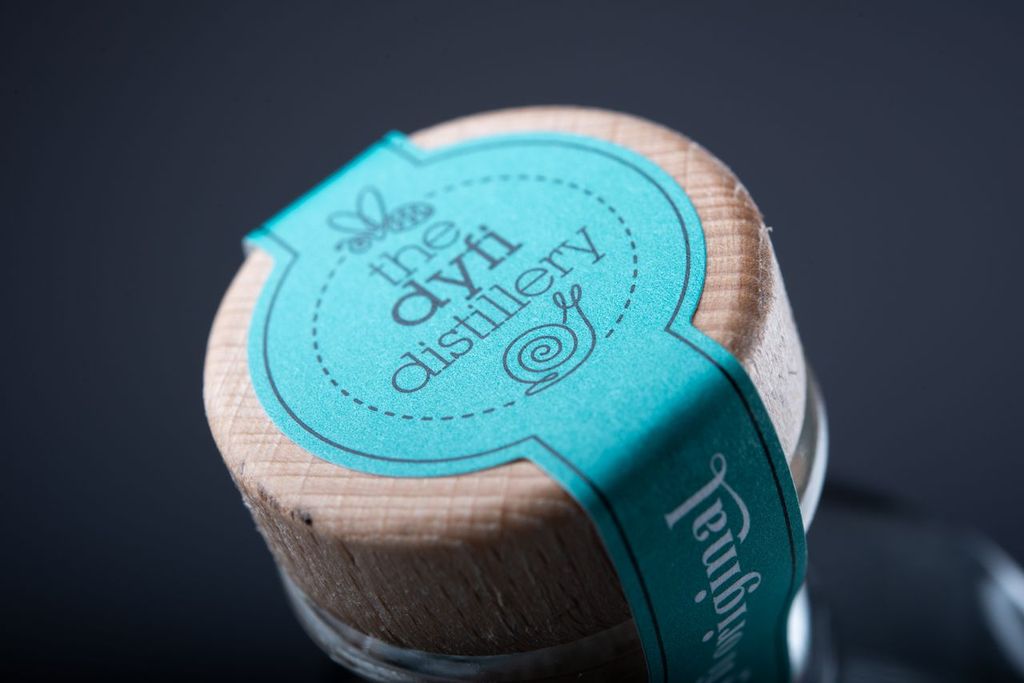
Beneath the soaring peaks of the Snowdonia foothills, where the Dyfi River traces its winding path down to the Irish Sea, lies a valley unlike any other. This is the Dyfi Valley, a place of extraordinary natural beauty and ecological significance, recognized by UNESCO as a World Biosphere Reserve. It is a sanctuary where low pollution levels and radical biodiversity create a forager’s paradise. It is also the birthplace of a spirit—a gin—that is perhaps the most genuine expression of Welsh terroir ever bottled.
This is the story of Dyfi Distillery, not merely a company that makes gin, but a commitment to place, precision, and passion, driven by the unlikely collaboration of two brothers.
The foundation of Dyfi Distillery rests on a sustainable blend of nature, science, and family. To understand the gin, you must first understand the creators: Pete and Danny Cameron.
The older brother, Pete Cameron, is the heart of the landscape itself. For over four decades, he has lived and worked in the Dyfi region. He first moved to the valley to study environmental biology. He has been a hill farmer, a beekeeper, and, crucially, a forager. Pete possesses an intimate connection with this wild landscape, having spent decades gathering knowledge of its flora and fauna. He knows the rhythms of the seasons, the fragility of the ecosystem, and the secrets of the diverse species that thrive here.
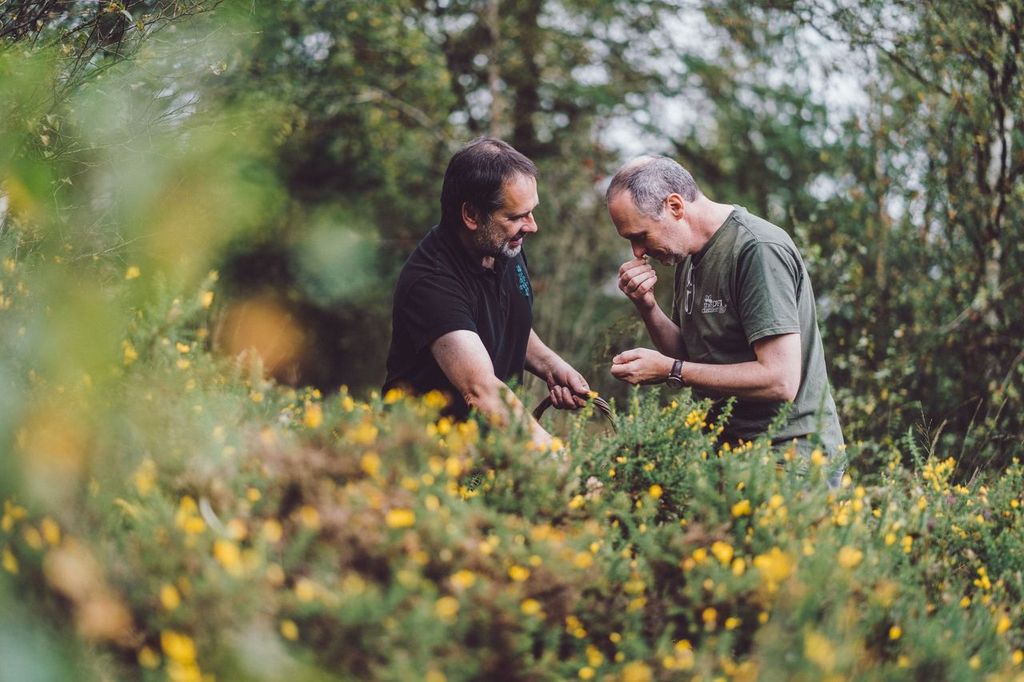
The younger brother, Danny Cameron, is the navigator. He is a highly experienced wine and spirits professional, having spent many years in the drinks industry, including judging at some of the world’s best beer, wine, and spirits competitions. He even earned a knighthood while working with wineries in Portugal due to his knowledge and experience with wines and spirits.
The idea to open a distillery was born from the desire to combine these two disparate skill sets. Danny and Pete sought to produce a spirit that truly tasted of the place from which it came. Given the valley’s rich, wild environment—a “forager’s paradise”—gin was the obvious route.
After two years of intensive research and experimentation, the Cameron brothers opened Dyfi Distillery in March 2016. Their ambition was bold: to create gins that not only reflected their native Welsh landscape but could also rival the complexity and texture of fine malt whisky or cognac.
The geographical area underpinning Dyfi Distillery’s identity is the Dyfi/Dovey UNESCO World Biosphere Reserve. The designation acknowledges the diversity of the flora and fauna, and the sustainable interaction humans have with that environment. The reserve stretches over 845 square kilometers, encompassing 765 square kilometers of land and 80 square kilometers of sea.
This landscape is a mosaic of habitats, ranging from high peat moorland, through the Dyfi/Dovey forest, down to estuary marshlands and sand dunes. The climate is mild, moderate, and maritime, heavily influenced by the Gulf Stream, which ensures a low occurrence of frost or snow. Rainfall is abundant, and the wide altitudinal range—from 905m at Aran Fawddwy down to the estuary—creates exceptionally diverse growing conditions.
This unique combination of environmental factors is precisely what provides the wide range of indigenous species necessary for botanically complex gins.
The Dyfi Distillery’s commitment to sustainability is profound; it not only involves respecting this fragile, UNESCO-protected environment but also creating world-class gins to support the local rural economy. The distillery became the first to receive the accreditation UN Sustainable Development, associating it with the UN Support the Goals 2030 project.
By 2019, the region’s growing reputation for craft spirits had earned the valley the nickname of a ‘Gin Mecca’ by the Daily Telegraph.
The brothers realized early on that translating the delicate complexity of the Dyfi Biosphere into a stable, high-quality spirit required extraordinary control.
Between 2016 and early 2019, they distilled in very small batches using two small 100-liter stills. They sourced their preferred equipment from a specialist still maker in Colorado, which they then further customized. The result was a process one commentator dubbed “precision-distilling”. This involved developing and adapting techniques to allow for maximum control over maceration temperatures and variable copper contact during distillation.
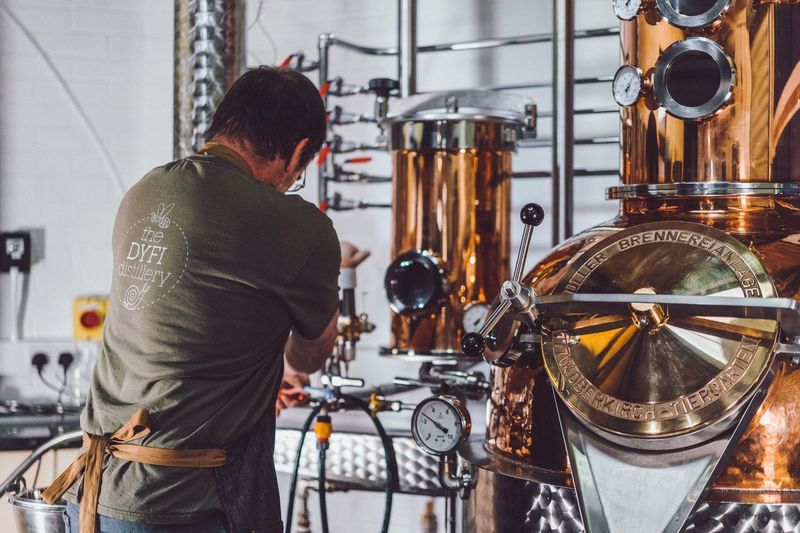
In 2018, seeking to enhance this craft, they collaborated with another family firm: specialist small still-makers in Germany’s Black Forest. They spent a year designing and building a bespoke ‘total control system’ still, combining the craft of traditional manufacture with the adaptations they had learned were necessary for producing foraged-led distillates.
The final distillation equipment employed today is a batch-operated column still that intentionally combines the typicity of traditional copper pot batch production with the advantages of a column still. This setup allows the distiller to practice “precision distillation,” providing the technological advantages needed to highlight the specific purity and complexity of the native botanical bill.
The equipment features several unique characteristics designed for quality control:
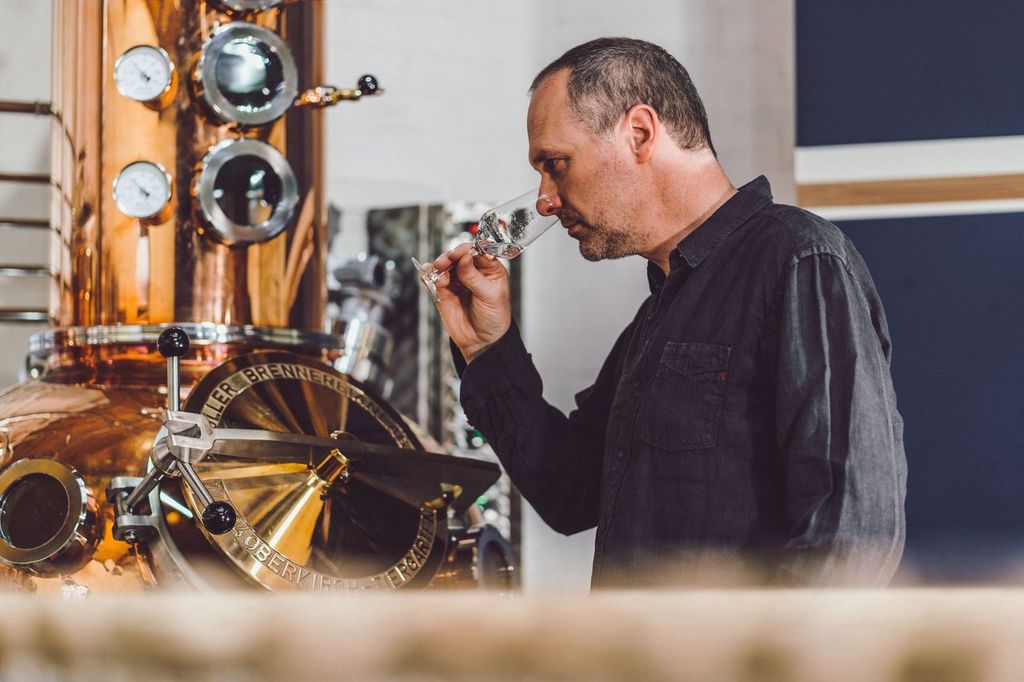
The distiller’s skill lies in knowing the exact timings of the ‘distiller cuts’—when to separate the undesirable ‘Heads’ (first compounds condensed) and the unwanted ‘Tails’ (the final element) from the desired ‘Hearts’ cut (the core liquid containing all the unique flavors and aromas). This skill, combining both science and craft, can take years to develop.
The unique quality, characteristic, and reputation of Dyfi’s flagship spirits are derived from their forage-led distillate, which is directly attributable to its geographical origin.
The Dyfi Distillery produces provenance-based gins, all featuring a significant contribution from locally harvested botanicals. Foraging is the first of three key production processes (followed by maceration and rectification), and all three must take place within the designated geographical area.
The signature expression, ‘Dovey Native Botanical Gin’ (for which Pollination Gin is the qualifying product), must include a minimum of 17 native botanicals that are sustainably foraged from within the Dyfi/Dovey UNESCO World Biosphere Reserve. Furthermore, these foraged components must make up not less than 50% of the non-juniper botanicals by weight. This ensures the foraged elements make a clearly distinguishable contribution to the finished flavor profile.
This emphasis on local, native botanicals contributes to a more sustainable approach to production, reducing food miles compared to traditional gins where botanicals are often shipped from outside the UK and Europe. Using foraged components also eliminates the use of pesticides and herbicides associated with farmed botanicals.
The Forager’s Knowledge
The skill associated with sustainable foraging is a crucial human factor in the gin’s production. Pete, or those under his direct supervision, must possess extensive knowledge:
The harvested materials are recorded in a ‘Received Botanicals Record Sheet’ to confirm their provenance and the supervision of the harvest.
The native botanicals used—such as Bilberry fruit, Bog Myrtle leaf, Gorse flower, Hawthorn berry and flower, Meadowsweet flower, Rowan berry, and Scots Pine needle—contribute to different flavor groups. For example, floral components contribute fresh, heady perfumed top-notes, leaf components contribute primary herbal and secondary grassy characters, while fruit and berries provide base notes.
The dedication to this forage-led, precision process has resulted in a portfolio of award-winning gins, each reflecting a specific aspect of the Dyfi landscape.
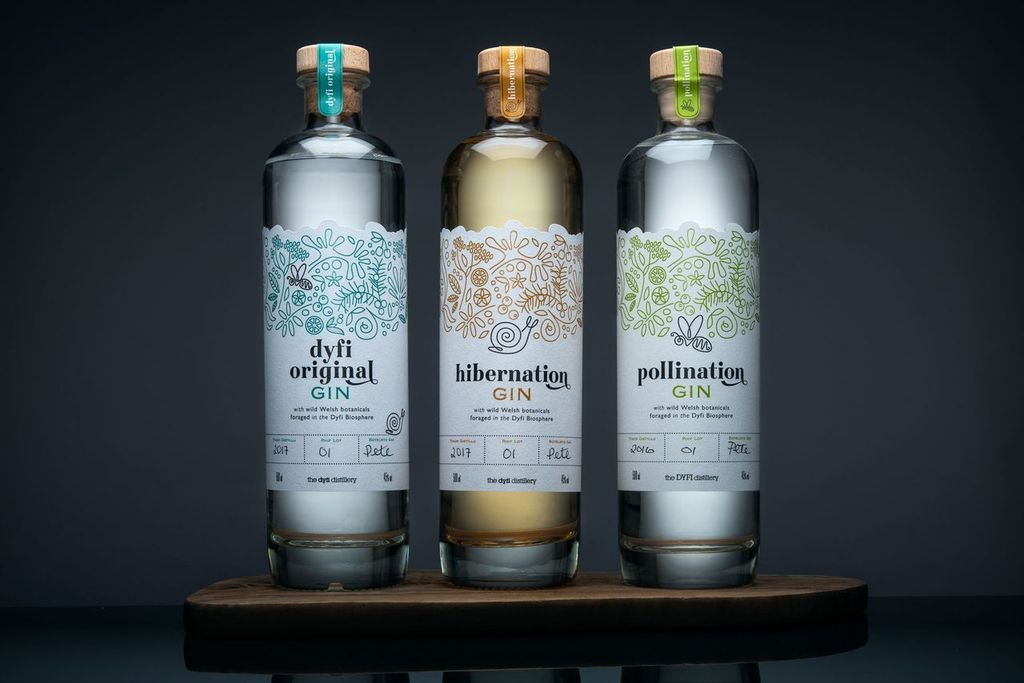
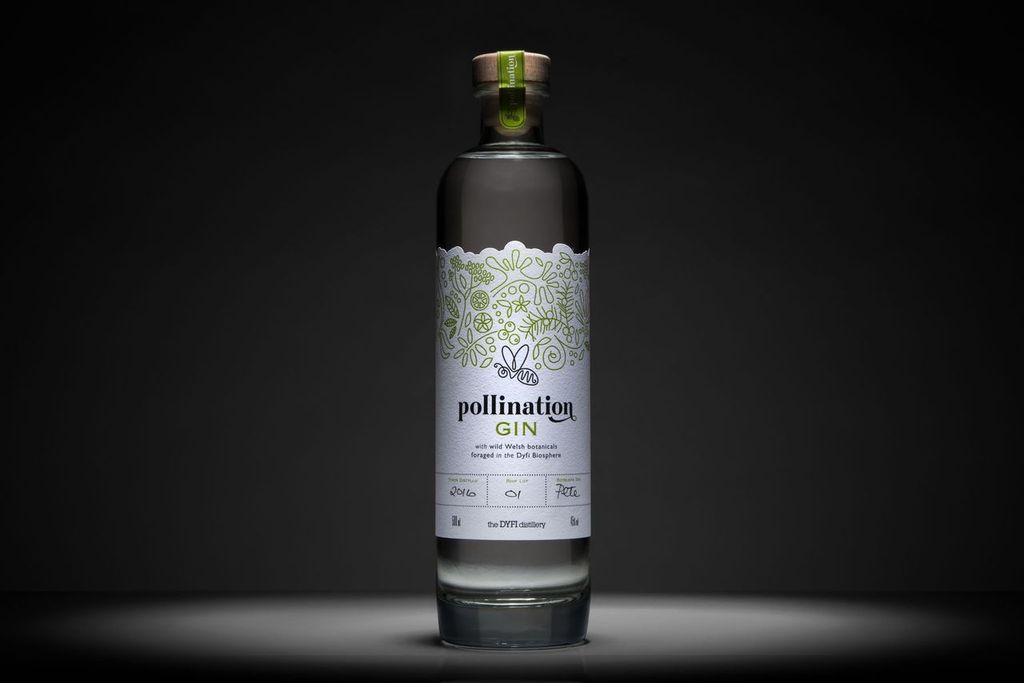
The journey to perfect Pollination Gin took the brothers three years of trials. It is botanically complicated, using up to 29 botanicals, 20 of which are foraged.
One visitor described Pollination as the “gin equivalent of walking through a wild flower meadow,” a testament to its influence of wild flowers and green leaf components.
Meadowsweet (Filipendula Ulmaria), known locally as blodau’r mêl (‘honey flower’), is a very important component. This botanical has a history in the Dyfi area going back 3,000 years, where it was used to flavour ale.
Sensory Profile
Independent sensory analysis concluded that the gin has clear differences in its sensory profile compared to the brand leader of London Dry Gin.
The complexity stems from the fact that no single plant material (other than the predominant juniper note) dominates; instead, it is a complex blend of different and notable characteristics derived from the essential oils of the broad botanical bill.
For serving, the gin is recommended neat or in a classic G&T with a twist of lemon or grapefruit peel. For a wild Welsh twist, it shines in a dry martini, garnished with a fennel frond.
Hibernation Gin tells the story of the valley in the colder months. This is a barrel-aged gin, crafted using botanicals foraged later in the year, including wild crab apples, blackberries, bilberries, and lingonberries.
The gin is then aged over the winter—literally “hibernating”—in a port cask. Notably, it holds the distinction of being the first gin in the world to be matured in a white port cask, specifically one previously used to mature white port by the producer Niepoort.
The dominant botanicals—wild crab apples, blackberries, and bilberries—impart a roundness, richness, and depth of flavor, marrying beautifully with the barrel character.
Hibernation Gin is incredibly complex and robust, with layers of complexity under a classic juniper-led palate. Tasting notes describe a crisp, herbal nose with citrusy juniper and hints of orchard fruit. The palate is spicy and fruity, featuring a burst of cinnamon and sharp apple, leading to aromatic grape notes, fading behind sweet fruit and soft nutmeg spice. It has a soft, spicy finish with hints of apple, pear, and white grape. It is a gin designed to be sipped neat or mixed into gin-heavy cocktails like Martinis and Negronis.
Hibernation Gin was recognized early, winning Best New Gin by The Independent in 2017.
The dedication to quality and provenance quickly brought widespread recognition. Dyfi Distillery holds the distinction of being the only distillery to win the Best British Gin trophy at the Great British Food awards twice. Pollination Gin won the award in 2017, and Dyfi Original took the trophy in 2018.
However, the ultimate validation of their commitment to place arrived in 2025.
In 2025, Protected Geographical Indication (PGI) status was awarded to gin in Britain under the UKGI scheme, and Pollination became the first and only British gin to qualify for protected geographical status. This was registered under the name ‘Dovey Native Botanical Gin’ PGI.
GIs are a form of intellectual property protection recognizing that a product’s qualities, characteristics, and reputation are inextricably linked to the place where they are produced or the method by which they are produced.
Achieving this status required the brothers to formally document the specific characteristics that distinguish their product from others in the category (London Dry Gin). These differences are tangible:
As Danny Cameron reflected, the PGI status was never pursued as a marketing idea—the distillery is genuinely artisan—but it helps communicate that this gin is produced at a world-class level while possessing genuinely regional characteristics.
Further solidifying its global standing, Dyfi Gin was named one of the Top Gins of 2025 by VinePair, recognized for its clarity of flavor, purity, and craftsmanship, affirming that the spirit truly captures the essence of its Welsh homeland.
Awards:
Best British Gin 2018
Best British Gin 2017
IndyBest Best New Gin 2017
World Gin Awards Gold 2020
World Gin Awards Best Welsh Dry Gin 2020
The story of Dyfi Distillery is proof that the pursuit of excellence rooted in sustainability and provenance can create a truly exceptional product.
The brothers recognized that part of their mission was sharing the beauty and philosophy of their home. The visitor centre is co-located with the Corris Craft Centre, King Arthur’s Labyrinth, and Corris Mine Explorers. It is open to visitors seven days a week from April 1st to October 31st (as per the 2025 schedule).
While they do not offer formal distillery tours, visitors are welcomed equally to chat with the family, taste their spirits, or simply browse the artistic storyboards and view the distillery through a large glass screen. In 2018, The Independent listed the distillery as one of the “Ten Best Experiences to celebrate World Gin Day”.
For Danny, this face-to-face interaction is invaluable; he recalls a gentleman from Brisbane, Australia, who planned his entire two-year holiday around the opportunity to visit the Dyfi Distillery.
The distillery itself, nestled in the village of Corris, embodies the spirit of its region—a place of “gorgeousness” that extends to its people and its environment. Visitors are encouraged to explore the local area, climb Cader Idris, visit the Dyfi Osprey Project, and seek out the dolphins in Cardigan Bay.
Dyfi Distillery is not just making spirits; it is preserving and celebrating the wild, diverse flavor profile of the Dyfi Biosphere, offering a true sensory journey through one of Britain’s most biodiverse landscapes. It is a tangible link, in a bottle, between the skills of the forager and the expertise of the distiller.
In a world full of gins, Dyfi offers something rarer: a taste of wild, clean Wales. The spirit epitomizes a strong sense of place and provenance, confirming the valley is, as Pete and Danny intended, truly reflected in every drop.