WalesLink.com
Connecting the World to Wales
WalesLink.com
Connecting the World to Wales

WalesLink.com
Connecting the World to Wales
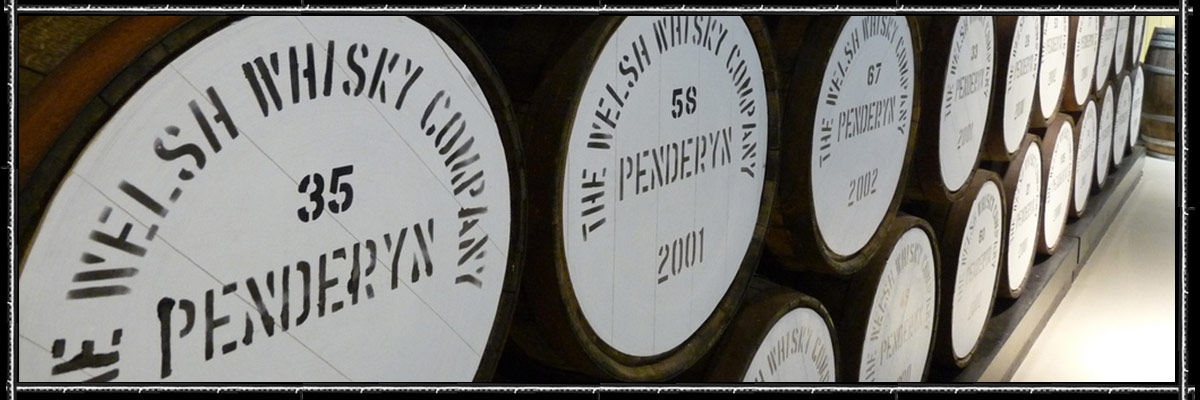
For a generation, the very notion of a “Welsh whisky” was met with scepticism, sometimes dismissed as a “curiosity” or even a “real nonsense”. Yet, through sheer determination, technical genius, and an unwavering commitment to quality, Penderyn Distillery did not just revive a forgotten craft; it became a global pioneer, putting Wales firmly back on the international spirits map. This is the story of how a small group of friends transformed a local dream into a world-class legacy.
The history of Wales is etched deep into its dramatic mountainsides and coastal valleys, a story often recounted through tales of ancient princes, miners, poets, and the fierce, protective spirit of the Red Dragon. But for nearly a century, one distinct chapter of Welsh heritage lay dormant: the noble art of whisky distillation.
Whisky production in Wales is not a new concept. Archaeology suggests that small stills were present throughout Wales potentially as far back as the 4th century. Indeed, Welsh roots ran deep in the earliest days of global distilling: in 1705, Evan Williams, a native of Dale in Pembrokeshire, journeyed to America and established himself as one of the founding fathers of the Kentucky Bourbon industry.
Formal industry, however, proved fragile. In 1889, a significant sum was invested to establish The Welsh Whisky Distillery Company at Frongoch, near Bala, in North Wales. This was not a small craft operation; its anticipated full production capacity was ambitious, projected to reach 150,000 gallons per annum. Yet, by 1900, the company was placed into liquidation, and by 1903, the distillery had closed entirely. The demise was partly attributed to the strong local Temperance movement and the fact that the spirit was not taken seriously either inside or outside Wales.
The industry’s fate was sealed a few years later when David Lloyd George, the only Welsh person ever to hold the role of Prime Minister, introduced the ‘3 years and 1 day’ maturation rule in 1915. Though intended to shut down illegal stills that were perceived to be damaging the war effort, this legislation inadvertently established the foundation for the modern, premium whisky industry by standardizing quality. With no distilleries left, the art went silent for nearly a century.
It was against this backdrop of silence that the idea for Penderyn was born.
Fast forward to 1999. In the Glancynon Inn, a pub nestled in Hirwaun in the South Wales valleys, a group of friends shared a defining conversation. Their question was simple but profound: Why was there no Welsh whisky? They made a resolute decision to establish the first distillery in Wales in over 100 years.
The founders’ initial dream was ambitious: to create a whisky as pure and precious as Welsh gold. This concept became central to the brand’s identity, symbolized today by the ‘gold seam’ visible on Penderyn bottles.
The ideal location was quickly secured. Alun ‘The Glan’ Evans, the landlord of the Glancynon Inn, offered his wine warehouse in the nearby village of Penderyn. This site was perfect, primarily due to its natural resource: a borehole that drew fresh natural spring water directly from the foothills of the Brecon Beacons National Park (Bannau Brycheiniog). This area is geographically significant, lying within the Fforest Fawr National Geopark, an area administered by UNESCO for its geological heritage.
In those early years, the challenge was immense. Stephen Davies, CEO of Penderyn, recalled that in 2004 and 2005, the idea of Welsh whisky was considered “one of the worst ideas you know you could think of!”. Compounding this difficulty, the integrity of Welsh whisky had been damaged previously by a “rogue operation in the Brecon Beacons that was repackaging Scotch as Welsh whisky”. But propelled by sheer determination and “bloody mindedness,” the founders moved ahead.
In 2004 and 2005, the idea of Welsh whisky was considered “one of the worst ideas you know you could think of!”.
Stephen Davies, CEO of Penderyn,
To conquer the scepticism, Penderyn knew its product had to be world-class, and its methods unique. Their solution lay in the apparatus itself: the unique copper single-pot Faraday still.
This still, designed by Dr. David Faraday, a relative of the great Victorian scientist Michael Faraday, is often described as a modified pot still hybrid. While most Scottish and Irish distilleries use conventional two- or three-pot ‘lantern’ still systems, the Faraday still operates in batches like a pot still, but incorporates the principles of column distillation.
The genius lies in the process:
This resulting new make spirit is exceptionally clean, light, fruity, and flavoursome. Crucially, the process removes many undesirable chemical compounds that a conventional pot still system cannot achieve. Because the spirit is so clean from the outset, the cask ageing process is used primarily not for purification, but to build complexity, flavour, and depth.
The first distillation in the unique still was carried out on September 14, 2000.
In later years, recognizing the need for versatility, Penderyn expanded its capacity. In 2013/2014, a replica Faraday still was installed, alongside a pair of Scottish-style ‘lantern’ stills. The traditional lantern stills produce a slightly heavier, oilier spirit, coming off at 66–70% ABV (an average draw of 74%). This allows Penderyn to experiment with new whiskies by mixing this heavier product with the signature Faraday spirit.
The technological innovation of the Faraday still ensured quality, but it was the late Scottish whisky expert, Dr. Jim Swan, who defined the Penderyn “house style”. Dr. Swan came aboard as Master Distiller and blender in 2002 because he recognized that the Faraday still produced a “world class spirit”.
Dr. Swan’s influence was profound, developing the specific maturation regimen. He established a culture of “attention to detail” in the team. The journey of the spirit begins with maturation in the finest hand-selected American oak ex-bourbon barrels. A high proportion of these casks are sourced from the Buffalo Trace Distillery in the USA, widely recognized for its quality.
The defining element of Penderyn’s original style, however, is the Madeira finish. Dr. Swan recommended that after the initial bourbon ageing, the whisky be transferred to Portuguese barriques that had previously nurtured a rich Madeira wine. Penderyn maintains a special relationship with a cooperage that supplies only the very best Madeira houses. This finishing process allows the spirit to slowly leach the Madeira from the oak, “gaining increased subtlety and complexity”. The resulting Madeira Finish (bottled at 46% ABV for the Gold range) is praised for its notes of cream toffee, rich fruit, raisins, and tropical fruit, resulting in a supremely smooth, light in character whisky.
This core style quickly advanced to include other innovative finishes, such as Portwood (from Portuguese fortified wine casks, a favourite in France), Sherrywood (finished in dry Oloroso sherry casks), and Rich Oak (finished in rejuvenated European ex-wine casks, sometimes using the STR—scraped, toasted, re-charred—process). For the Peated edition, Penderyn achieves a delicate smoky character through finishing in ex-Islay heavily peated quarter casks for 6–9 months, rather than using peated malted barley, resulting in a light and sweet, yet subtly smoky, approachable peated whisky.
The human element was also paramount. Dr. Swan recruited the current distilling team, which is predominantly female, including Laura Davies (General Manager of Distilleries), Aista Phillips (General Manager of Blending and Maturation), and Bethan Morgans (Distiller and Swansea Copperworks Manager). Aista Phillips, who now serves as Master Blender, trained directly under Dr. Swan.
With the product perfected, Penderyn officially launched its first bottle of Single Malt Welsh Whisky on St David’s Day, March 1, 2004, in the presence of HRH Prince Charles, The Prince of Wales.
The company quickly moved from being a local anomaly to an international pioneer. In the year 2000, only a handful of countries were distilling whisky, but Penderyn’s foresight positioned it at the forefront of the burgeoning world whisky industry. Penderyn is now exported to over 50 countries, including key markets such as the USA, France, Germany, and China. Exports alone account for over 40% of sales.
The quality of the spirit has garnered immense recognition, with Penderyn winning over 100 international Double Gold and Gold medals, including repeated wins at the San Francisco World Spirits Competition. Penderyn has been verified as the whisky brand with the fastest rate of growth in the global “World Whisky” category and is recognized as the most well-known World Whisky brand in the UK. The brand’s success has established it as a significant symbol of Wales’ “soft power” globally, acting as a cultural ambassador.
The brand also benefits from a strong Welsh identity, which is reflected in its ranges:
Penderyn’s success necessitated expansion beyond its original home base. The strategy involved opening two new distilleries, turning the operation into a nationwide movement spanning North and South Wales.
The original distillery remains the headquarters and spiritual home. Located in the village of Penderyn, the spirit is married with water drawn from the Brecon Beacons. The site opened its award-winning visitor centre in June 2008, quickly becoming one of South Wales’ top attractions.
The second distillery opened in May 2021 in Llandudno, North Wales. This site is uniquely housed in a beautiful, renovated Grade 2 listed school building on Lloyd Street. The distillery uses water sourced from beneath the Great Orme Lighthouse. Crucially, Llandudno is where Penderyn first began experimenting with using peated barley to create a peated new make spirit, a shift from their previous method of finishing in peated casks. This allows the team to learn and develop new styles using the Faraday still.
The third distillery opened in June 2023, located in the historic Hafod Morfa Copperworks in Swansea. This multi-million-pound project restored the old powerhouse and copper rolling mill. The site uses water sourced from the world-famous Dan-yr-Ogof caves. The location itself is celebrated as part of the Copperopolis Icon of Wales release, reflecting Swansea’s history as the centre where, from 1720, up to 50% of the world’s copper was smelted.
While the Swansea site contains Faraday stills and a visitor centre, whisky production was temporarily paused in August 2024. Chief Operating Officer Neil Quigley stated this decision was made to align production with forward sales forecasts due to the “slowing economy” causing a reduction in demand for premium products. However, the visitor centre, retail space, tastings, and corporate events continue to operate, preserving the historical importance of the site. Despite this temporary halt, CEO Stephen Davies has expressed plans to potentially increase the production capacity at Swansea beyond the initial plan when the economy improves.
As Penderyn proved that high-quality whisky could be produced outside traditional whisky regions, the concept of a “Welsh whisky industry” quickly grew. This surge meant that the industry needed protection and definition.
Penderyn CEO Stephen Davies worked diligently to establish a Geographical Indication (GI). Davies noted that GI protection would “ringfence the quality and reputation of Welsh whisky as a prelude to taking on the mighty Scottish and Irish distilleries”.
In July 2023, the official launch of the Welsh Geographical Indicators (GI) for Single Malt was announced at the Royal Welsh Show. This momentous achievement, granted approval by the Department for Environment, Food and Rural Affairs (DEFRA), plays a crucial role in safeguarding the unique identity, authenticity, and characteristics of the Welsh spirit. Penderyn, alongside other burgeoning distilleries like Dà Mhìle, In the Welsh Wind, and Coles, secured this protected status. Stephen Davies confirmed that the GI ensures the whisky is fermented, distilled, matured, and bottled in Wales, guaranteeing its origin.
From a late-night chat in a humble pub in Hirwaun to becoming the fastest-growing World Whisky brand and a cultural ambassador exported to over 50 countries, the story of Penderyn Distillery is truly remarkable.
As Penderyn approaches its 25th year of distilling in 2025, it continues to look forward, driven by the innovative spirit of the Faraday still and the legacy established by Dr. Jim Swan. The journey, led by determination and innovation, has secured Welsh whisky’s place among the world’s elite. The dream of creating a spirit as precious as Welsh gold has been realized, and, emphatically, the art of distilling in Wales is “a lost art no more”.