WalesLink.com
Connecting the World to Wales
WalesLink.com
Connecting the World to Wales

WalesLink.com
Connecting the World to Wales
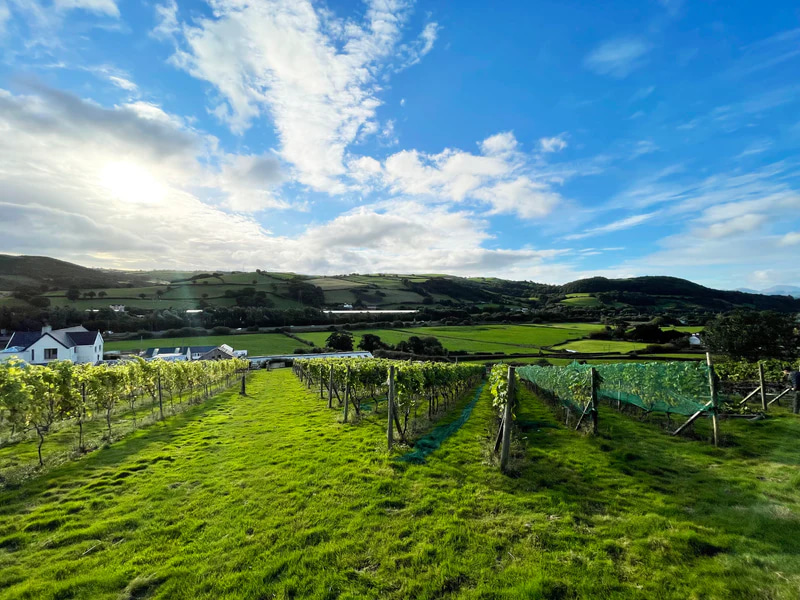
Nestled in the dramatic landscape of North Wales, between historic castles and the sweeping peaks of Eryri (Snowdonia), Gwinllan Conwy Vineyard is quietly reshaping the narrative of British wine. While few would associate this cool, rain-kissed region with vineyards, the success of Gwinllan Conwy Vineyard proves that Welsh terroir—combined with vision and sustainable innovation—can yield exceptional wines with global appeal.
Founded in 2012 by husband-and-wife duo Colin and Charlotte Bennett, Gwinllan Conwy Vineyard began as a bold experiment: planting vines along the A55 near Llandudno, where shale and slate soils combine with a dry microclimate shaped by the Foehn effect. These conditions grant vines an extended growing season—an anomaly in the UK—and make the site ideal for viticulture.
From modest beginnings, the vineyard has grown to encompass 3 acres in Conwy and an additional 3.5 acres in Dwyran, Anglesey. Producing award-winning wines while managing without an on-site winery, the Bennetts work closely with a local contract winemaker to ensure quality control. All batches undergo rigorous lab testing, and sulfite levels are kept well below UK limits, resulting in clean, expressive wines.
Rather than imitating warmer wine regions, Gwinllan Conwy Vineyard embraces varieties that thrive in its native climate—chiefly hybrids bred for cool, damp environments. Rather than imitating warmer wine regions, Gwinllan Conwy has made an inspirational choice to embrace grape varieties that thrive in its native climate. These hybrids are now praised for their sustainability and for producing complex wines that are forcing the world of wine to take note.
Looking ahead, Gwinllan Conwy Vineyard is considering Sauvignon Blanc and Cabernet Franc, anticipating that climate change may soon bring North Wales closer to Loire Valley conditions.
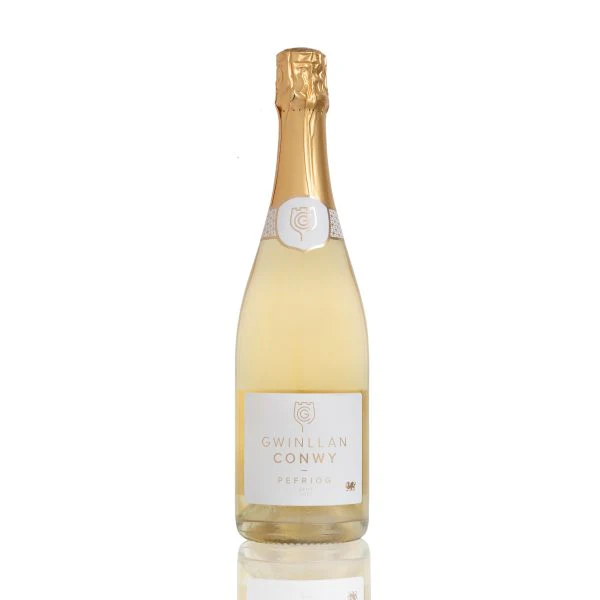
Pefriog 2022 – Sparkling Welsh Wine
The perfect wine for celebrations and special occasions with friends!!
Our Sparkling wines are made using ‘méthode traditionnelle’. The base wine is put in bottles along with yeast and a small amount of sugar, called the ‘liqueur de tirage’, stopped with a crown cap and stored in a wine cellar horizontally for a secondary fermentation. Our wine is the riddled using mechanised equipment called a gyropallette.
In 2021, Gwinllan Conwy launched an agricultural experiment that would make waves far beyond Wales: mulching with sheep fleece. Suggested by local farmer and TV presenter Gareth Wyn Jones, this idea proved a sustainable alternative to glyphosate spraying.
Initial trials under two rows of vines yielded impressive results:
Financially, fleece application is comparable in cost to chemical spraying but offers long-term environmental and labour benefits. It also creates new demand for Welsh wool, which often lacks commercial value. This has led to the launch of Wool & Wine, a business by the Jones family supplying fleece to vineyards across the UK.
More than just a vineyard, Gwinllan Conwy Vineyard is now a hub for wine tourism. From April through autumn, the estate offers guided tours and tastings on Thursdays, Fridays, and Saturdays. Options range from basic wine tastings to packages including local cheese or Welsh grazing boards.
Set against views of the Carneddau range, the tours are relaxed and educational, led by Colin Bennett himself. Visitors can stroll through the vines, learn about cultivation methods, and sample the wines in a bright, modern tasting room or outdoor patio.
The vineyard is easily accessible by taxi from Llandudno Junction train station, making it ideal for visitors without a car. Local restaurants and shops also stock Gwinllan Conwy Vineyard wines, embedding them in the region’s growing culinary identity.
Gwinllan Conwy is part of a broader transformation: the rise of Welsh wine. As of 2024, nearly 40 vineyards are operating across the country, riding a wave of consumer interest and innovation. Welsh (and English) wine sales surged 31.3% in 2021 alone.
The Welsh Government has launched an ambitious strategy to grow the sector to £100 million by 2035. Priorities include:
Gwinllan Conwy Vineyard plays an active role in this future. It collaborates with vineyards like Ancre Hill and Gwinllan Hebron on a government-supported project to reduce synthetic chemical use and decarbonize vineyard operations—a natural extension of its fleece-based innovation.
Gwinllan Conwy Vineyard is more than just a success story. It’s a case study in how marginal wine regions can compete with the best through thoughtful grape selection, climate-smart techniques, and community-rooted sustainability.
The sheep fleece initiative embodies this ethos perfectly: a circular solution that boosts grape quality, improves soil health, and revitalizes the local wool industry. Paired with award-winning wines and an inviting tourism offering, Gwinllan Conwy Vineyard is helping define what the future of Welsh wine can look like: bold, sustainable, and uniquely local.
Whether you’re a curious wine drinker or a sustainable farming enthusiast, Gwinllan Conwy Vineyard is well worth a visit—and a toast.

Plan Your Visit: Tours available Thursday to Saturday. Book directly at www.gwinllanconwy.co.uk
Getting There:
Taste Wales: Look for Gwinllan Conwy Vineyard wines at local restaurants, shops, and online retailers. Or buy direct from the Gwinllan Conwy Vineyard website.