WalesLink.com
Connecting the World to Wales
WalesLink.com
Connecting the World to Wales

WalesLink.com
Connecting the World to Wales

Close your eyes and imagine the wind sweeping down through the Llanberis Pass on a bitter January morning. It is not a gentle, pastoral breeze. It is a sharp, biting force that carries the chill of the surrounding peaks, whistling through the jagged, violet-grey terraces of a mountain that has been systematically carved to the bone.
Listen closely, beneath the howl of the wind and the modern quiet of the Welsh valleys. If you tune your ears to the echoes of the past, you might just hear the sharp crack of explosives, the rhythmic thud of iron on stone, and the terrifying, high-pitched hum of tightly wound steel cables stretching across the sky.
When we think of Eryri (Snowdonia), our minds often drift to romanticised, dew-kissed visions of rolling green hills, peaceful lakes, and wandering sheep. We picture tranquil landscapes untouched by time. But to truly understand the soul of North Wales, we must strip away that idyllic veneer and look at the raw, unyielding grit that built its communities.
This is the story of the Dinorwic Slate Quarry. More specifically, it is the story of the ‘Blondins’—the staggering, death-defying aerial ropeways that transformed a majestic mountain into an industrial powerhouse, and the incredibly resilient men who rode them across lethal drops to harvest the slate that literally roofed the world.
To comprehend the sheer necessity of the Blondins, you first have to understand the mind-boggling scale of the Dinorwic Quarry. Situated on the steep flanks of Elidir Fawr, towering above the glacial waters of Llyn Peris, this was not just a hole in the ground. It was an entire mountain, dismantled piece by piece by human hands.
At its peak in the late 19th and early 20th centuries, Dinorwic was the second-largest slate quarry on the planet. Over 3,000 men worked its sheer faces. They were a formidable army of rockmen, splitters, and labourers, drawn from the local villages of Llanberis, Deiniolen, and the surrounding valleys.
The slate they extracted was renowned globally for its unparalleled quality, weather resistance, and beautiful, rich colour. If you walk the streets of late 19th-century neighbourhoods in London, Hamburg, Melbourne, or Boston, you are likely walking under roofs fashioned from the very rock of Elidir Fawr.
But moving that slate from the raw rock face to the world’s rooftops meant relying entirely on the brutal, back-breaking labour of the valley’s own men.
Dinorwic was carved into massive, stepped terraces, known as galleries. Some of these galleries were connected by precarious, narrow inclines, but as the quarry expanded and dug deeper into the heart of the mountain, massive chasms and pits were formed. Hauling multi-ton blocks of solid rock up steep, slippery inclines using only horses or small steam locomotives became dangerously inefficient and, in some areas, physically impossible.
The quarry owners needed a way to bypass the treacherous terrain. They needed to take to the sky.
In the late 1800s, the quarry engineers looked upward for a solution. They installed a network of heavy-duty, aerial ropeways suspended hundreds of feet above the jagged slate pits.
These intricate systems of steel and tension were affectionately, and perhaps a little morbidly, dubbed “Blondins” by the quarrymen. The name was a direct nod to Charles Blondin, the world-famous French tightrope walker who had thrilled international audiences by crossing the Niagara Gorge on a tightrope in 1859.
A Blondin system was an awe-inspiring marvel of Victorian and Edwardian engineering. It consisted of a massive main bearing cable stretched taut between two heavily anchored points on opposite sides of a vast quarry pit.
Along this primary cable ran a carriage, which was manipulated by a complex series of hauling and hoisting ropes. These ropes were controlled from a winding house, usually perched precariously on a cliff edge, operated by a highly skilled winding engineman.
The primary purpose of the Blondin was heavy lifting. Giant chains or chains attached to wooden trays would be lowered directly down into the quarry pits. The rockmen below would load immense, multi-ton slabs of raw, un-split slate onto the trays.
With the pull of a lever in the winding house, the steam—and later electric—engines would roar to life. The heavy slab would be hoisted vertically out of the pit, then whisked horizontally across the sky, dangling high above the dizzying drops, before being safely deposited at the processing sheds or onto railway wagons waiting on the terraces.
While the Blondins were designed to transport stone, it didn’t take long for them to be used for something far more precious—and far more terrifying.
At the end of a grueling, twelve-hour shift, faced with a long, exhausting climb up steep slate ladders and inclines in the freezing rain, the quarrymen found an alternative route. They rode the Blondins.
Picture the scene. It is 1905. A thick, freezing mist has descended upon the Llanberis Pass. The slate underfoot is slick with rain. A group of Welsh quarrymen, their faces dusted grey, their clothes damp and smelling of sweat and stone dust, pile into a shallow, open wooden cart suspended by chains from a steel cable.
There are no safety harnesses. There are no high-visibility jackets or hard hats. There is only the rough wood of the cart, the cold iron of the chains, and a sheer, lethal drop of hundreds of feet into the jagged, unyielding slate chasms below.
With a jolt, the cart lifts off the ground. The men swing out over the void. The steel cable above them hums and whines under their collective weight. The wooden cart creaks and sways violently in the wind.
Looking down meant staring directly into the abyss of the quarry pits. Looking forward meant trusting implicitly in the unseen engineman in the distant winding house, and in the strength of a steel cable subjected to relentless daily wear and tear.
This wasn’t a theme park ride; this was a daily commute. It requires a staggering level of absolute grit, unwavering camaraderie, and perhaps a touch of dark humour to casually ride a tightrope of steel over a man-made canyon just to get home for supper.
It completely redefines our understanding of the Welsh landscape. The mountains here aren’t just scenery; they are monuments to the staggering bravery and backbreaking labour of the generations who came before.
To truly honour the legacy of the Dinorwic quarrymen, you must understand the communities they built and the local economy they established. When we talk about “The Front Line,” we are talking about exactly this: the direct connection between the history of the land and the modern artisans who keep its spirit alive today.
After a long day exploring the towering, slate-strewn terraces of Dinorwic, you will undoubtedly feel the chill of the mountain air in your bones. There is only one proper way to warm up, and it involves stepping into one of the historic, stone-built pubs nestled in the heart of Llanberis.
Imagine pushing open a heavy oak door to be greeted by the intoxicating, smoky aroma of a crackling log fire. The atmosphere is instantly welcoming, a sanctuary from the wild Snowdonian weather outside.
This is where the true “Taste of Wales” comes to life. Head straight to the bar and ask for a pint of local ale. Eryri is home to some phenomenal independent microbreweries that draw their water from the very same mountains that yielded the slate. A pint of rich, ruby-dark Welsh ale, pulled fresh from the cask, carries notes of roasted malt and dark fruits—the perfect, earthy antidote to the high-altitude winds.
But the drink is only half the story. To truly support the local supply chain, you must look at the menu. Seek out the establishments that proudly champion local produce.
You want a hearty, slow-cooked stew made with Welsh Black Beef. This isn’t just any beef; it comes from a historic, native breed of cattle that has grazed on the rugged Welsh hillsides for over a millennium.
When you order a dish like this, you are experiencing the Front Line in action. You are tasting beef raised by a local farmer just a few miles down the valley. You are eating root vegetables grown in rich, Welsh soil. You are supporting the pub landlord who chooses to buy from the butcher on the high street rather than a faceless wholesale distributor.
By backing the pub landlord who buys directly from the farmer down the road, you are funding the very artisans who keep this valley’s independent spirit alive. As you savour the rich, melt-in-the-mouth beef and the deeply savoury, ale-infused gravy, you are participating in a cycle of local support that has defined North Wales for centuries.
The massive Blondin cables have long since been dismantled, but the ghostly infrastructure of the Dinorwic Quarry remains, waiting to be discovered by intrepid explorers, history buffs, and families seeking an educational adventure.
Today, the site is a breath-taking juxtaposition of raw industrial ruin and the unstoppable, reclaiming power of nature.
Here is how you can step back in time and experience the legacy of the slate valleys:
As you wander through the silent terraces of Dinorwic today, you will witness the slow, relentless revenge of the mountain as nature reclaims the slate. The mountain, once blasted and broken by dynamite and iron, is slowly healing itself.
Where the deafening noise of industry once reigned, there is now a profound, echoing peace. Silver birch trees sprout defiantly from the cracks in the slate waste. Thick, vibrant green moss blankets the rusted iron wheels and discarded chains, turning relics of hard labour into objects of haunting beauty.
Feral goats, descendants of the herds kept by the quarrymen, now navigate the treacherous inclines with ease. Peregrine falcons nest in the sheer, man-made cliffs, utilizing the towering heights that were once the domain of the Blondin cables.
It is a poignant reminder that while the era of the great Welsh slate boom has passed, the landscape endures. The scars of industry have softened into a landscape of dramatic, melancholic beauty, creating a playground for modern explorers and a sanctuary for wildlife.
To visit Dinorwic is to do much more than look at an old quarry. It is to walk in the footsteps of giants.
It is to acknowledge the sweat, the danger, and the absolute engineering genius that defined an era. When you stand on the edge of a deep slate pit and imagine the hum of a Blondin cable vibrating in the wind, you strip away the polished postcard view of Snowdonia and connect with its true, beating heart.
So, the next time you find yourself in North Wales, don’t just look at the mountains. Step into them. Walk the old inclines. Touch the cold, violet stone.
Then, retreat to a cosy, fire-lit pub, order a pint of local ale, and raise a glass to the rockmen, the enginemen, and the tightrope walkers of the sky who carved a livelihood out of the solid rock of Elidir Fawr. To truly know this place, you must listen to its stories, taste its local flavours, and remember the incredible people who shaped it.
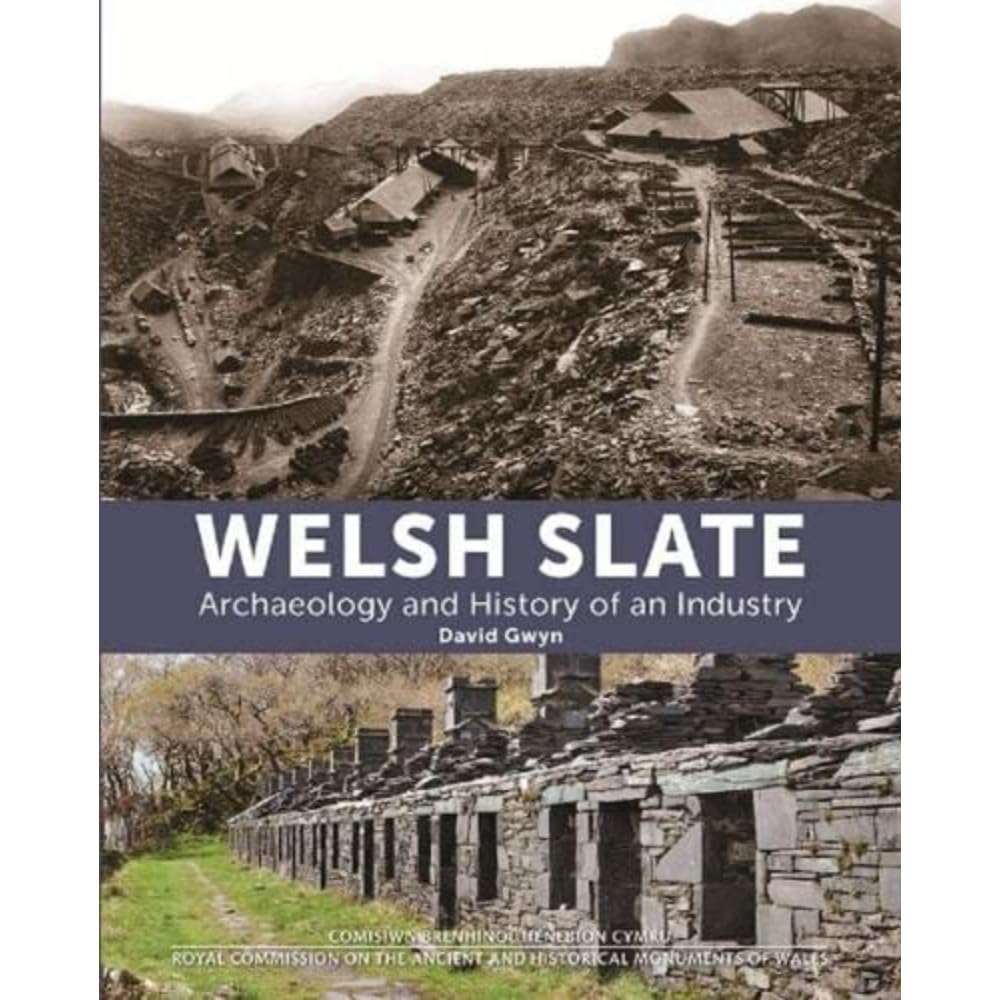
If you want to move past the tourist trails and truly understand the staggering scale of Eryri’s industrial past, this is the Bible. Dr. David Gwyn’s comprehensive book breaks down the raw engineering, the brutal conditions, and the global dominance of the Welsh slate industry./
As an Amazon Associate, WalesLink earns from qualifying purchases.